 United StatesJFK
 MexicoMEX
 BrazilGRU
 ArgentinaEZE
 ChileSCL
 ColombiaBOG
 PeruLIM
 PanamaPTY
 Costa RicaSJO
 Dominican RepublicPUJ
 JamaicaMBJ
 BahamasNAS
 BarbadosBGI
 United KingdomLHR
 IrelandDUB
 FranceCDG
 GermanyFRA
 NetherlandsAMS
 BelgiumBRU
 SwitzerlandZRH
 AustriaVIE
 ItalyFCO
 SpainMAD
 PortugalLIS
 GreeceATH
 TurkeyIST
 DenmarkCPH
 SwedenARN
 NorwayOSL
 FinlandHEL
 PolandWAW
 Czech RepublicPRG
 HungaryBUD
 IcelandKEF
 United Arab EmiratesDXB
 QatarDOH
 Saudi ArabiaRUH
 IsraelTLV
 EgyptCAI
 MoroccoCMN
 South AfricaJNB
 KenyaNBO
 NigeriaLOS
 IndiaDEL
 PakistanLHE
 Sri LankaCMB
 SingaporeSIN
 MalaysiaKUL
 ThailandBKK
 VietnamSGN
 PhilippinesMNL
 IndonesiaCGK
 Hong KongHKG
 ChinaPVG
 TaiwanTPE
 JapanHND
 South KoreaICN
 AustraliaSYD
 New ZealandAKL
What is the best time to visit Bali?
For dry weather and calm seas, the best time to visit Bali is roughly June to September. May and October are good shoulder months with fewer people. December to March is the wet season. Avoid Nyepi, the Day of Silence in March, unless you plan around it, because the airport closes for 24 hours and the island stops.
That is the short version. The longer one matters because Bali's calendar has features that a weather chart misses: a religious holiday that cancels hundreds of flights, school-holiday peaks from Australia, an entry visa whose fee is under review, a tourist levy, and a road network that makes the same 35 km feel very different in July and in February. This guide puts those pieces on one timeline, with the official sources named so you can check them again before you fly.
One caution up front. Climate on Bali is described in rough bands, and weather is shifting. Indonesia's weather agency, BMKG, said in a September 2026 release that a very strong El Niño is under way, and an Indonesian national forecast for the 2026/27 rainy season expects it to start later than usual in much of the country. It did not give Bali's onset date in the pages we could read, so check BMKG's regional forecast before you lock in a December trip.
Dry season vs wet season
The travel reference we consulted describes the wet season as running roughly December to March, with heavy showers and high humidity, and the dry season as roughly June to September, with low humidity, cool evenings and very little rain in the lowland coastal areas. Daytime temperatures sit around 20 to 33°C all year.
Three nuances matter for choosing where to stay.
- The Bukit Peninsula (Uluwatu, Jimbaran, Nusa Dua) gets far less rain than the rest of the island. A wet-season trip centred on Uluwatu is much drier than the same trip centred on Ubud.
- Central Bali and the mountains can be cloudy or showery in any month. Higher places such as Bedugul and Kintamani get chilly after sunset.
- Southern beaches can be less clean in December and January, when runoff and rubbish wash ashore.
If you want a single recommendation, June to September gives the most predictable weather, May and October give most of it with softer crowds, and December to March suits travellers who accept afternoon downpours in return for greener scenery and, outside the Christmas fortnight, lower prices.
Month by month at a glance
| Months | Weather | Crowds | Watch for |
|---|---|---|---|
| January to March | Wet season, humid, heavy showers | Busy over New Year, quieter after | Beach debris in the south in January; Nyepi in March |
| April to May | Drying out, sunny days | Moderate | Easter and Australian school holidays |
| June to August | Dry season, low humidity | Busiest period, especially July | Ubud and Seminyak traffic, high demand for cars |
| September to October | Dry, warming up | Moderate; Australian holidays at the end of September | Rain may return later in October |
| November to December | Wet season arrives; BMKG's outlook points to a later start in much of Indonesia | Builds towards Christmas | Peak pricing from mid-December |
Treat this as a planning grid rather than a forecast. Bali's seasons shift by a few weeks from year to year, and the table does not replace a forecast two weeks before travel.
Nyepi: when the whole island and the airport stop
Nyepi, the Balinese Day of Silence, is the biggest scheduling trap in the Bali calendar. It follows the Balinese Saka calendar, so the date moves every year. Nyepi 2026 was on 19 March (see the Antara report below). For 2027, the sources we found give 8 or 9 March, so confirm the date before you book.
What happens: for 24 hours from 6 am, the airport closes, ports close, and people are expected to stay indoors. Fire, electricity and entertainment are switched off in the community, and travel and work stop. Hotels may not allow check-in or check-out, and visitors are not exempt from the rules. Tourists who break them can face serious consequences.
This year's closure is a useful example. For Nyepi 2026, the I Gusti Ngurah Rai airport suspended operations for 24 hours from 6 am on 19 March to 6 am on 20 March, following a notice to airmen (NOTAM). About 440 scheduled commercial flights were affected, 231 domestic and 209 international. The last international departure before the closure was at 1:30 am on the morning of the 19th, and the first departures after reopening were at 7 am (domestic) and 8:15 am (international) on 20 March, according to the Antara news agency's report.
Three practical rules follow:
- Check the Nyepi date for your travel year as soon as you pick dates.
- Do not book a flight into or out of Bali on the closure day; plan an arrival the day before or after.
- If you are already on the island, plan to stay at your hotel for the full 24 hours. Stock water and food in advance, and ask your hotel what its policy is.
The evening before Nyepi, the ogoh-ogoh parades (large demon effigies) draw crowds and close streets in many towns. If you want to see them, base yourself near a town with a parade route and allow extra time for any evening drive.
Costs at the border: visa on arrival and the tourist levy
Two charges apply to most foreign visitors, and both have been in the news this year.
Visa on arrival (VOA). The fee for a 30-day visa on arrival has been IDR 500,000. On 12 August 2026 the Director General of Immigration announced a change to the fee structure, according to a report by the national broadcaster RRI. That report gave no effective date, and we could not find the change on the official immigration site, so we do not quote the new amounts here. Check the Indonesian immigration portal for the fee that applies on your travel date, and apply for an e-VOA before you fly if you can.
Bali tourist levy. Bali's official Love Bali FAQ states that foreign tourists pay a levy of Rp 150,000 per person, once during a trip to Bali, before leaving Indonesia. Payment is cashless and can be made through the Love Bali system before you enter Bali, at payment counters at Bali's airport and ports, or through registered endpoints such as hotels and travel agents. After payment you receive a voucher with a QR code by email. Paying online before departure is encouraged to speed up arrival. Details are on the Love Bali FAQ.
Experiences at the airport vary, and one travel reference reports that checks and counters have been inconsistent. The simplest course is to pay online in advance and keep the voucher on your phone, so you are covered whatever happens at the gate.
School holidays and peak weeks
Bali's busiest periods are the mid-year dry season (June to August, with a peak in July), Christmas and New Year, and the school-holiday weeks that Australian families favour, including the end of September and early October. Prices for villas and cars rise, and popular restaurants book out.
If your dates are flexible, shifting a trip by two weeks can change both the price and the road. Late May and early-to-mid October often deliver dry-season weather without the mid-year crush, though the exact edges of the season shift each year.
Traffic and drive times from the airport
Most visitors land at Ngurah Rai (DPS) in the south and drive to one of four areas. These are road distances and free-flow drive times from OSRM, rounded, to a central point in each area. The peak column is our own planning allowance, not a measured figure; real times depend on the hour, the day and what is happening on the road.
| From DPS airport to | Approx. distance | Without traffic (OSRM) | Peak (late morning to evening, high season; our allowance) |
|---|---|---|---|
| Seminyak | about 11 km | roughly 15 min | 60 to 90 min |
| Canggu | about 19 km | roughly 25 min | 75 to 100 min |
| Uluwatu | about 20 km | roughly 30 min | 75 to 100 min |
| Ubud | about 35 km | roughly 35 to 40 min | 1 h 45 to 2 h 15 |
The pattern is consistent. Seminyak and Canggu clog earliest and longest, particularly in the late afternoon. The Ubud road is the one that surprises people in July, when a trip that is short at night can take several times as long by day. The Bali Mandara toll road, which serves Sanur and Nusa Dua, can be worth using on the way to those areas; check the current toll before you go.
Seasonal timing is part of the plan. If you land in the afternoon in July, the transfer to Ubud lands in the busiest hours. A flight arriving at night in the dry season feels like a different island.
Ways to get from the airport
| Mode | Door-to-door | Cost note | Best for |
|---|---|---|---|
| Pre-booked private car | Per the table above | Fixed fare via booker | Late arrivals, families, groups |
| Prepaid airport taxi | Same road time, plus the counter queue | Counter fare, set per zone | Walk-up arrivals |
| Metered taxi | Same road time, plus finding one outside the terminal area | Metered | Short hops to Kuta |
| Shared shuttle | Longer, multiple drops | Per seat | Solo travellers |
Metered taxis are found outside the arrivals area, so catching one means leaving the terminal. For a family arriving after a long flight, a car waiting with a name board saves that search.
Our route pages cover the common drives: Bali airport to Ubud, Bali airport to Seminyak and the Denpasar airport transfers page. If you want a car for the whole stay rather than a single transfer, see private driver in Bali.
Which month suits which kind of trip?
- Beach and surf in Uluwatu: June to September for calm mornings and dry afternoons, though swell and wind patterns vary by break.
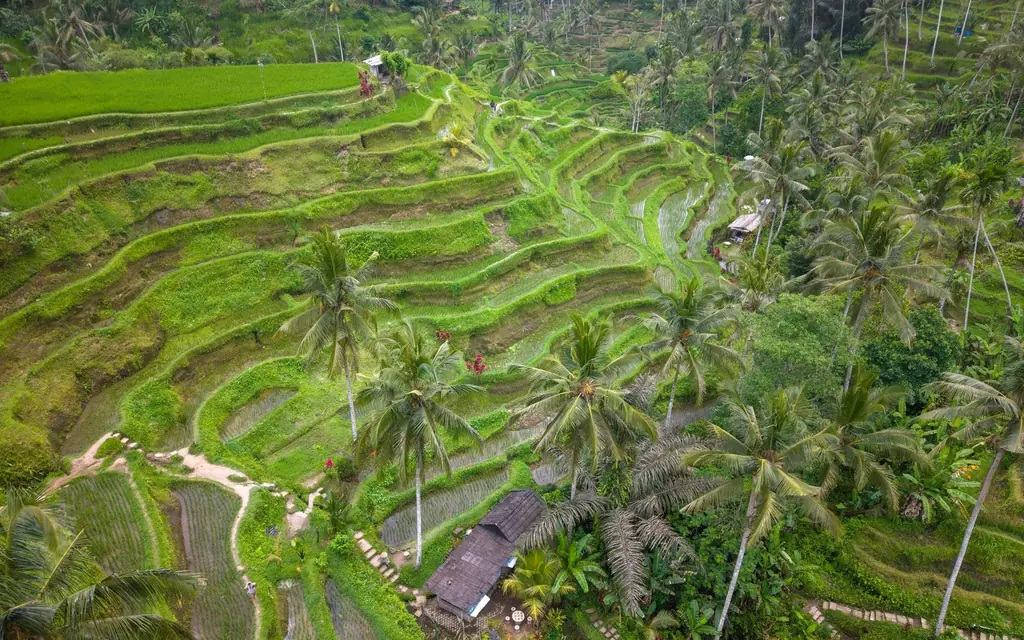
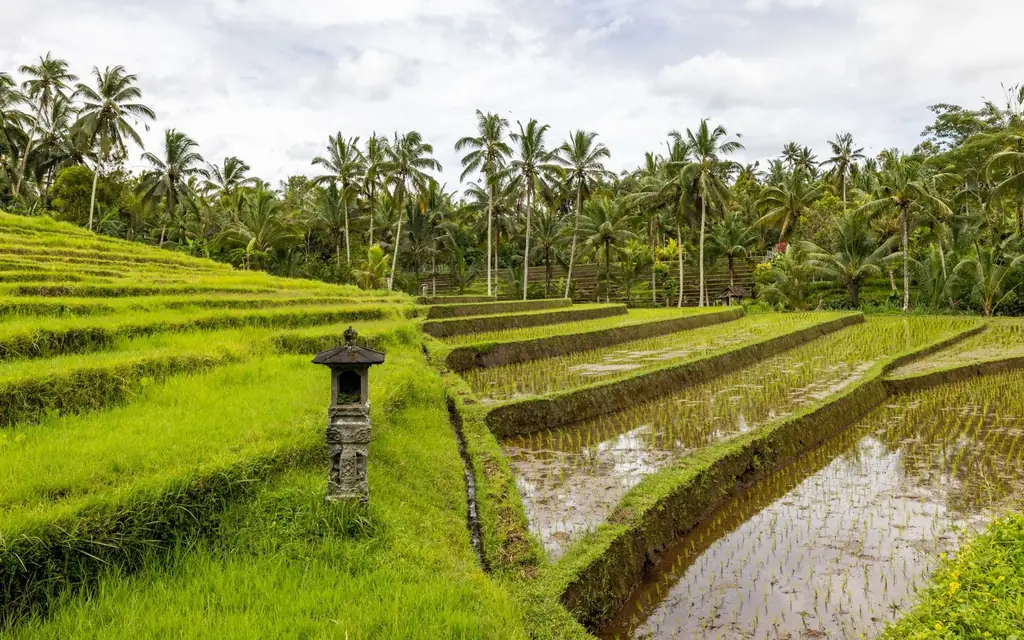
- Ubud culture and rice terraces: April to June and September to October, when the terraces are green without the heaviest rain.
- Honeymoon on a budget: early May or late October, avoiding Christmas and the Australian holiday weeks.
- Families: the Easter break is the exception to the quiet rule in April; otherwise choose May or the first half of October.
- Seeing a ceremony: Nyepi week in March offers rituals worth seeing, but only with a flexible schedule.
Wider planning for Indonesia and its neighbours is on our Asia-Pacific hub, and every other gateway we cover is listed under airport transfers.
A pre-flight checklist
- Confirm the Nyepi date for your year and avoid travel on it.
- Decide between VOA on arrival and an e-VOA, and read the current fee.
- Pay the Rp 150,000 tourist levy online and save the QR voucher.
- Book a car with your flight number so the driver sees delays as they happen, with free waiting time built in after international landings.
- Allow for double the off-peak drive time when you arrive in high season.
- Check BMKG's forecast two weeks before travel.
Frequently asked questions
When is the best time to visit Bali for good weather?
June to September is the dry season, with low humidity and little rain on the lowland coast. May and October are good shoulder months. The Bukit Peninsula stays drier than central Bali all year, and the mountains can be cloudy in any month.
Is Bali's airport really closed for Nyepi?
Yes. For Nyepi 2026, Ngurah Rai airport suspended all operations for 24 hours, from 6 am on 19 March to 6 am on 20 March, with about 440 commercial flights affected. Emergency flights can operate with approval. Check the date for your own travel year.
When is Nyepi in 2027?
The sources we found give 8 or 9 March 2027, so we cannot give a single confirmed date. Because the Balinese calendar is lunar, dates change, and the closure hours are confirmed by a notice to airmen close to the event. Confirm with the airport or your airline before booking flights that week.
How much is the Bali tourist levy?
Rp 150,000 per person, paid once during a trip to Bali, according to Bali's official Love Bali FAQ. It is cashless and can be paid online before you travel. After payment you receive a voucher with a QR code by email.
How much is the Indonesia visa on arrival now?
It has been IDR 500,000. Indonesian immigration officials announced a change to the fee structure on 12 August 2026, but the report gave no start date and we could not confirm the new amounts on the official site. Check the official immigration portal for the fee on your travel date.
How long is the drive from Bali airport to Ubud?
About 35 km, roughly 35 to 40 minutes without traffic. As our own planning allowance, allow 1 h 45 to 2 h 15 in peak daytime traffic, particularly in July and August. Plan an arrival outside the late-afternoon peak if you can.
Is Bali busy in December?
Yes, particularly from mid-December through the New Year, when prices rise. It is also wet season, though showers often come in the afternoon and clear quickly. If Christmas is fixed, book cars and villas early and allow extra time on the road.