 United StatesJFK
 MexicoMEX
 BrazilGRU
 ArgentinaEZE
 ChileSCL
 ColombiaBOG
 PeruLIM
 PanamaPTY
 Costa RicaSJO
 Dominican RepublicPUJ
 JamaicaMBJ
 BahamasNAS
 BarbadosBGI
 United KingdomLHR
 IrelandDUB
 FranceCDG
 GermanyFRA
 NetherlandsAMS
 BelgiumBRU
 SwitzerlandZRH
 AustriaVIE
 ItalyFCO
 SpainMAD
 PortugalLIS
 GreeceATH
 TurkeyIST
 DenmarkCPH
 SwedenARN
 NorwayOSL
 FinlandHEL
 PolandWAW
 Czech RepublicPRG
 HungaryBUD
 IcelandKEF
 United Arab EmiratesDXB
 QatarDOH
 Saudi ArabiaRUH
 IsraelTLV
 EgyptCAI
 MoroccoCMN
 South AfricaJNB
 KenyaNBO
 NigeriaLOS
 IndiaDEL
 PakistanLHE
 Sri LankaCMB
 SingaporeSIN
 MalaysiaKUL
 ThailandBKK
 VietnamSGN
 PhilippinesMNL
 IndonesiaCGK
 Hong KongHKG
 ChinaPVG
 TaiwanTPE
 JapanHND
 South KoreaICN
 AustraliaSYD
 New ZealandAKL
Getting from Heathrow to Gatwick is a task that looks easy on a map and turns awkward on the ground. The airports sit on opposite sides of Greater London, with the motorway ring between them, and there is no train that links them directly. This page is for travellers who land at one and fly out from the other, who are collecting a client or a family member from the second airport, or who are changing between a long-haul arrival and a European flight on separate tickets.
What is the best way to get from Heathrow to Gatwick?
For most travellers the best way is a pre-booked car for the 68 km road trip, usually 60 to 90 minutes, or the direct National Express coach for a single traveller on a fixed budget. There is no direct train and no free shuttle bus between the airports.
The coach is the public-transport answer and a reasonable one. A private car is the answer when you have luggage, a tight schedule, children, a group or a flight that will not wait. The rest of this page shows how big the gap is in each case and where the road gets slow.
Heathrow to Gatwick at a glance
- Distance: about 68 km (42 mi) by road, nearly all of it on the M25 and then the M23 spur to Gatwick.
- Typical drive time: 60 to 90 minutes. A clear Sunday morning can take about an hour; a weekday evening or a closure on the M25 can take two hours.
- Heathrow terminals: 2, 3, 4 and 5.
- Gatwick terminals: North and South.
- Free waiting: 60 minutes after an international landing and 30 after a domestic one, both counted from the actual landing time, and 15 minutes on other pickups.
The options compared
| Mode | Door-to-door time | Cost note | Luggage | Best for |
|---|---|---|---|---|
| Direct coach | 50 min fastest, but allow 75–120 min including the walk and the wait | From £14.90 one way as of 2026, including a £1.50 booking fee | Coach hold; check the carrier's limits | One traveller with flexible timing |
| Train with changes | No direct train; at least two legs, so longer than the coach | National Rail fares, varies | You carry bags between platforms | Only when coaches are full or disrupted |
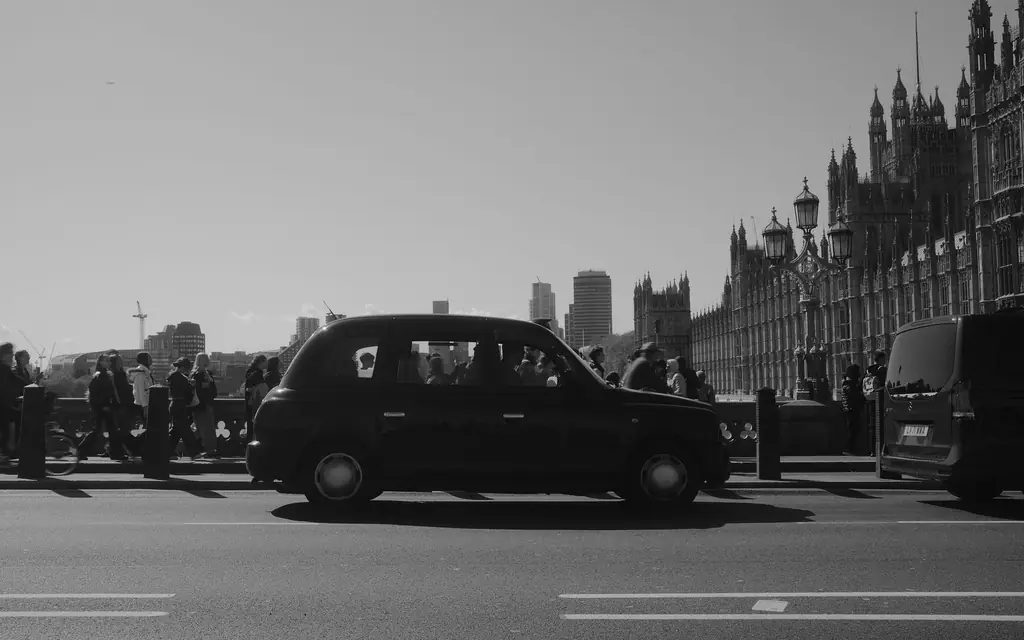
| London black taxi | 60–90 min | Metered; ask for the estimate first | Room for large bags | Occasional use, rank pickups |
| App-booked minicab | 60–90 min plus waiting for the match | Surge-priced | Depends on the car | Spontaneous trips |
| Private car with driver | 60–90 min from the kerb | Fixed fare via booker | All of your bags | Connections, groups, families, business travel |
The coach and the car both depend on the same motorway, so a closure hurts both. The difference is that the coach follows its timetable and you follow the coach, whereas a car leaves when you are ready and your driver can choose between the M25 and an alternative on the day.
The coach: what National Express actually runs
National Express lists up to 56 departures a day across five services (025, 200, 201, 210 and 230). The fastest journey is 50 minutes, from Heathrow Terminal 5 to Gatwick North. The first coach leaves Heathrow Central Bus Station, which serves Terminals 2 and 3, at 00:40 and arrives at Gatwick North at 01:45. The last leaves at 22:40 and arrives at 23:45.
Heathrow stops are the Central Bus Station, Terminal 4 and Terminal 5. At Gatwick the coaches serve North and South, but not every service calls at both, so check which terminal your service ends at. Fares start at £14.90 one way, including a £1.50 booking fee that does not apply when you book on the website or app while logged in.
That makes the coach the sensible choice for a solo traveller with one bag and a gap of several hours between flights. It is a poor fit after the last departure, and it offers little margin if your first airport runs late.
Why there is no simple train
Rail users sometimes expect a link, as there is between some European airports, but no direct train joins Heathrow and Gatwick. A rail journey means leaving the airport, changing at a main-line station, and often crossing London or going round it, with your bags on every platform.
For most travellers that is slower and more tiring than either the coach or a car, and the cost saving over the coach is small. Keep rail for situations where roads and coaches are disrupted. Gatwick Airport lists the train operators that call there, and a journey from Heathrow normally starts with the Heathrow Express, the Elizabeth line or the Piccadilly line into London, described on Heathrow's rail page. Check live times on National Rail before you travel.
Heathrow to Gatwick by private car: when it is the better call
A transfer between airports is a different job from a trip into town, because the clock is hard: you have a departure to catch, a check-in cut-off and a baggage re-check ahead.
- Self-connect itineraries. Two separate tickets mean no airline protects you. A car with a driver who knows the route gives you the most reliable timing.
- Several travellers. One vehicle carries the whole party and its bags to the correct Gatwick terminal.
- Heavy or oversized luggage. Golf clubs, skis, musical instruments, cabin trunks.
- Children. Add a child seat at booking; infant, toddler and booster sizes are available.
- Late arrivals. The last coach has gone, and the car is waiting at arrivals.
- Privacy. Some clients prefer a closed vehicle and a quiet driver; Onroutz.ca What happens in the car stays there: no client photos, no social posts, and an NDA if you want one.
Classes run from the Executive Sedan (up to three passengers, two large and two cabin bags) to the Luxury SUV (up to six, five or six large bags) and the Executive Sprinter (up to 12 passengers and 12 bags). See the fleet page for descriptions; the model is confirmed at booking.
The road itself: the M25, the M23 spur and where it slows
From Heathrow, cars join the M25 and head south and east round the ring, then leave at junction 7 for the M23 spur, which ends at Gatwick. Most of the delay comes from three things.
- The south-west quadrant of the M25. The Surrey stretch near the A3 junction is a regular pinch point at the start and end of the working day.
- Roadworks and closures. Planned full closures on England's motorways are listed in advance in the National Highways closure report, and your driver checks live traffic news on the day as well.
- Heathrow's own approach roads. The tunnel and spur roads out of the central terminal area can back up on bank holiday weekends and at the start of school holidays, which adds minutes before you reach the motorway.
Typical windows:
- Before 07:00 and after 20:00: the best chance of about 60 minutes.
- Weekday peaks: 75 to 90 minutes.
- Friday afternoons and bank holiday Fridays: allow up to two hours.
- Sundays: quiet early, busy mid-afternoon when day-trippers return.
If you are connecting between flights, add a safety margin of at least an hour to these figures.
How much time do you need between flights?
Travellers searching for this route are often asking how much time they need to move between airports on separate tickets. The honest answer is more than the coach or car suggests. Add the time to leave your first airport (immigration, bags, perhaps customs), the drive, and the check-in and security queues at the second.
As a planning rule, we suggest at least five to six hours between your landing and your next departure when you change airports on separate tickets, and more in school holidays. With less than that, a delay at the first airport can make you miss the second flight and the airline owes you nothing. Longer gaps allow time for a meal or a hotel stop between the two.
UK entry rules for the airport you land at
Visitors from the USA and Canada normally need a UK Electronic Travel Authorisation. The GOV.UK ETA page lists it as £20 per traveller, including children, valid for visits of up to six months. If your trip involves a stay in the UK before your flight out from the other airport, you need it. If you stay airside at one airport and never clear the border, check with your airline.
Of everything on the checklist, the passport and the ETA are the two items nobody can fix for you at the arrivals hall. A driver can wait and track your flight, but cannot walk you through the border.
Hotels, lounges and an overnight between flights
Many airport-to-airport trips are really two journeys with a rest in the middle. If your gap is long, there are three sensible ways to use it.
- Sleep near the second airport. Book a hotel close to Gatwick and ask for a drop there first, then a short run to the terminal in the morning.
- See a slice of London. With six or seven hours, a driver can take you into town for lunch and back, with bags in the vehicle and the road time on the clock. This needs a clear margin and is not recommended on a short connection.
- Rest in a lounge. Some travellers prefer to go straight to the second airport and use a lounge before check-in opens.
A driver is useful in each case because your bags stay in one place and your pickup time can move if you change your mind. Ask the desk to quote the hourly option if you want a stop of this kind, and use the airport transfers hub to compare it with a straight run.
How the booking works
Onroutz.ca is a Toronto-based desk. In the London area your ride is delivered by a vetted, licensed and commercially insured local transfer partner, and the booking, confirmation, support and invoice all come from the Onroutz.ca desk in Toronto. The result is a single booking, confirmation and invoice, and a contact who answers 24/7.
For a Heathrow to Gatwick run, give the arrival terminal, flight number and the departure terminal at Gatwick (North or South). Flight tracking adjusts the pickup if your plane is early or late. Meet and greet inside arrivals is available on request, with an alias name on the board if you prefer discretion.
Related pages: the London Heathrow airport page, the London Gatwick airport page, the Heathrow to central London route and the Europe region. Browse every airport transfer or all point-to-point routes. For multi-stop days, the travel desk builds itineraries on one booking.
Frequently asked questions
Is there a free shuttle between Gatwick and Heathrow?
No. There is no free shuttle bus between the two airports. The direct coach is a paid service with fares from £14.90 one way as of 2026, and there is no direct train. A private transfer or a taxi are the other options, and the booker shows our fixed fare before you pay.
How much time do I need to transfer from Gatwick to Heathrow?
For the road leg, plan 60 to 90 minutes. For the whole connection on separate tickets, we suggest five to six hours between landing and the next departure, because you must clear the border, collect bags, check in again and pass security at the second airport. The same rule applies in the other direction.
How much is an Uber from Heathrow to Gatwick?
There is no standard figure. App fares depend on demand, traffic, the hour and the vehicle type, and they surge when many flights land. Over a 68 km trip the swings are large. The booker shows a fixed all-in fare for your exact pickup, drop-off and vehicle before you pay.
Do I need an ETA to transfer through Heathrow?
If you pass through UK border control, travellers from the USA and Canada normally need an ETA. The GOV.UK ETA page lists it at £20 per person. A change of plane that stays airside, where you do not clear the UK border, is a different case, so confirm with your airline.
Which is faster, the coach or a private car?
The fastest coach takes 50 minutes between Terminal 5 and Gatwick North, but allow longer for the walk, the wait and other terminals. A car leaves when you arrive and drops at the right terminal, typically 60 to 90 minutes in all. In traffic both are slower, and the car is usually quicker door to door.
Will the driver take me to Gatwick North or South?
Either. Tell the desk which terminal your airline uses, or give the flight number and we will check. Gatwick North and South are linked by an inter-terminal shuttle, but starting at the right terminal saves the transfer and the bags.
What if my flight lands late at night?
The last National Express service from Heathrow Central Bus Station leaves at 22:40, so late arrivals need another option. A car meets you whenever the flight lands, tracks delays, and gives 60 minutes of free waiting after an international landing and 30 after a domestic one.
Can you add a stop on the way?
Yes. A hotel drop, a pickup of another passenger or a collection from an office can be added when you book, and multi-leg itineraries sit on one booking. Tell the desk the sequence so the quote and the timing include every stop.