 United StatesJFK
 MexicoMEX
 BrazilGRU
 ArgentinaEZE
 ChileSCL
 ColombiaBOG
 PeruLIM
 PanamaPTY
 Costa RicaSJO
 Dominican RepublicPUJ
 JamaicaMBJ
 BahamasNAS
 BarbadosBGI
 United KingdomLHR
 IrelandDUB
 FranceCDG
 GermanyFRA
 NetherlandsAMS
 BelgiumBRU
 SwitzerlandZRH
 AustriaVIE
 ItalyFCO
 SpainMAD
 PortugalLIS
 GreeceATH
 TurkeyIST
 DenmarkCPH
 SwedenARN
 NorwayOSL
 FinlandHEL
 PolandWAW
 Czech RepublicPRG
 HungaryBUD
 IcelandKEF
 United Arab EmiratesDXB
 QatarDOH
 Saudi ArabiaRUH
 IsraelTLV
 EgyptCAI
 MoroccoCMN
 South AfricaJNB
 KenyaNBO
 NigeriaLOS
 IndiaDEL
 PakistanLHE
 Sri LankaCMB
 SingaporeSIN
 MalaysiaKUL
 ThailandBKK
 VietnamSGN
 PhilippinesMNL
 IndonesiaCGK
 Hong KongHKG
 ChinaPVG
 TaiwanTPE
 JapanHND
 South KoreaICN
 AustraliaSYD
 New ZealandAKL
How do worldwide private transfers from Onroutz.ca work?
Worldwide private transfers are arranged through one desk in Toronto. In Toronto, the GTA and southern Ontario the car and chauffeur come from the Onroutz.ca fleet. Everywhere else a vetted, licensed and commercially insured local partner drives, while the Toronto desk books, confirms, supports and invoices the trip.
That split matters when you read the pages below. A Pearson pickup is dispatched from Toronto. A Lisbon, Singapore or Cancun pickup is driven by a partner on the ground, and partner vehicles are no more than four model years old (up to seven for Rolls-Royce, Bentley and Maybach). You still deal with The result is a single booking, confirmation and invoice, and a contact who answers 24/7.
This page is the map. It sends you to the region that matches your trip, then to the airport, route, cruise port, station or hotel page inside it. If you already know your pickup and drop-off, go straight to the booker.
Start at home: Toronto and the GTA
Toronto is where Onroutz.ca is based and where every ride is driven by our own fleet. The Toronto and GTA hub covers Toronto Pearson, Billy Bishop, Union Station, downtown hotels and the day trip to Niagara Falls.
If you live in Brampton, Markham, Oakville or another suburb, the airport limo suburb pages list pickup details by municipality. For the classic out-of-town run, see Toronto to Niagara Falls, about 130 km (80 mi) and usually around 1 h 30 each way in light traffic, longer on Friday afternoons.
Pearson to downtown is the one trip where the train is a serious rival. The UP Express advertises 28 minutes between the airport and Union Station (upexpress.com). We say so on the page and then explain when a car still wins: three or more travellers, heavy bags, a late arrival, or a hotel that is not beside Union Station.
Canada beyond Toronto
The Canada hub links the seven airport pages for Calgary, Edmonton, Halifax, Montréal-Trudeau, Ottawa, Vancouver and Winnipeg. It also links the long-distance city pairs on the routes hub: Toronto to Montréal, Ottawa and New York City, plus shorter resort runs such as Blue Mountain and Casino Rama.
Mountain resorts are a different kind of trip. Calgary to Banff and Canmore, and Vancouver to Whistler, are driven in winter conditions for part of the year, so the pages say what to allow and when snow tires or chains matter. Cross-border pairs such as Buffalo airport to Niagara Falls and Detroit airport to Windsor are on the transfers hub.
Foreign visitors flying into any Canadian airport need to check entry rules first. Travellers from visa-exempt countries need an eTA (CAD 7 as of 2026), and lawful permanent residents of the United States are exempt, according to Immigration, Refugees and Citizenship Canada.
United States
The USA hub is the largest regional list. It covers airport pages from Atlanta, Boston, Dallas, Denver, Honolulu, Los Angeles, Miami, Orlando, Philadelphia, Phoenix, San Diego, San Francisco, Seattle, Tampa and Washington Dulles, plus New York routes such as JFK to Manhattan and Newark to Manhattan.
Cruise embarkation is a big part of the American list. The cruise transfers hub opens onto Port Canaveral, Galveston and Seattle, and the transfers hub adds Miami airport to the cruise port and Fort Lauderdale airport to Port Everglades. These pages are timed around embarkation windows rather than flight times alone.
For business travel there are limousine pages for New York City and Chicago, the CES Las Vegas event page, and a private aviation page for Teterboro. Most visitors from visa-waiver countries travel on an ESTA, which the US government says requires an e-Passport (U.S. Customs and Border Protection).
Caribbean and Mexico
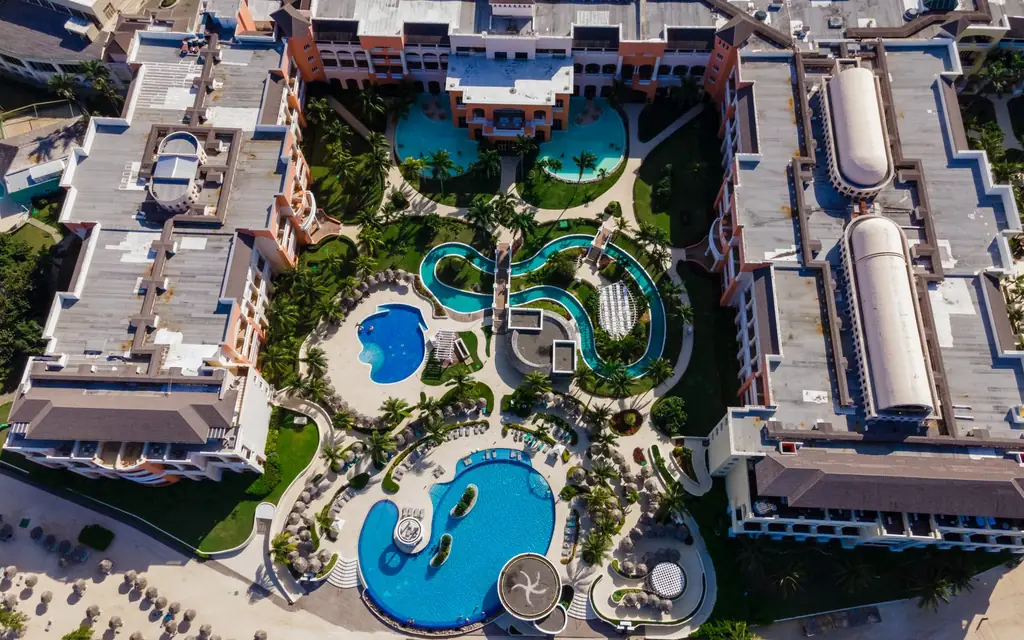
The Caribbean and Mexico hub is built around the resort transfers hub, where the airport is only the first half of the trip. The resort pages cover Cancún, Punta Cana, Los Cabos, Puerto Vallarta, Montego Bay, Nassau, Aruba, St Lucia and Costa Rica's Liberia airport.
Two of the most searched Mexican runs have their own pages: Cancún airport to Playa del Carmen and Cancún airport to Tulum. Hotel-zone arrivals sit under Cancún hotel zone and Punta Cana resorts, because a resort address decides the route more than the terminal does.
Europe
The Europe hub holds the continent's airport pages: London Heathrow and Gatwick, Paris Charles de Gaulle, Amsterdam Schiphol, Barcelona, Málaga, Palma, Lisbon, Athens, Istanbul, Rome Fiumicino, Milan Malpensa, Venice and Nice. Route pages go further than the airport, with Heathrow to Central London, the Alps from Geneva (Chamonix, Morzine, Courchevel and Méribel, Val Thorens), the Riviera from Nice and the Amalfi Coast from Naples.
Entry rules changed in 2026. The EU's Entry/Exit System has been fully operational since 10 April 2026, and ETIAS is not yet in operation; the EU says it will announce a start date well ahead of launch (travel-europe.europa.eu). The UK runs its own ETA scheme: each traveller, including babies, needs one unless they hold a British or Irish passport, and it covers visits of up to six months (GOV.UK).
Middle East
The Middle East hub centres on Dubai and Abu Dhabi, with airport pages for Dubai International, a dedicated luxury arrival page, Abu Dhabi Zayed, Doha Hamad and Riyadh King Khalid. Inter-emirate runs include Dubai airport to Abu Dhabi and Dubai to Sharjah airport.
Pilgrimage transport is handled with care. Jeddah airport to Makkah and Madinah to Jeddah airport are covered on their own pages, with wording that respects the rules for each city. For arrivals where privacy and speed matter, the meet and greet hub has Dubai and Abu Dhabi airport pages.
Asia-Pacific
The Asia-Pacific hub spans Singapore Changi, Hong Kong, Bangkok, Phuket, Kuala Lumpur, Manila, Hanoi, Ho Chi Minh City, Bali, Beijing, Shanghai, Delhi, Mumbai, Goa, Sydney and Melbourne. Japan is covered by route: Narita to Tokyo, Haneda to Tokyo, Kansai to Kyoto and the Tokyo Station rail page.
Long road transfers are the specialty here. Delhi airport to Agra, Bangkok to Pattaya, Incheon airport to Seoul and the Bali runs to Seminyak and Ubud list distance and typical drive time.
Browse by type of trip
If you know the kind of trip rather than the country, start with the type hub. Each one lists every page of that type, worldwide.
| Hub | What it covers | Pick it when |
|---|---|---|
| Airport transfers | Pickup and drop-off at airports | You hold a flight number |
| Transfers | Airport-to-place routes | You know both ends of the trip |
| Routes | City-to-city drives | The journey is two hours or more |
| Cruise transfers | Airport, hotel and port runs | You board a ship |
| Resort transfers | Caribbean, Mexico, Central America | The destination is a resort |
| Hotel transfers | Arrival at named hotel areas | You are travelling for business or leisure |
| Rail transfers | Station pickups | You arrive by train |
| Private aviation | FBO pickups | You fly privately |
| Events | Conferences, weddings, festivals | A date and a crowd drive the plan |
What to check before you travel
Entry paperwork is the most common cause of a missed pickup that has nothing to do with traffic. These are the rules for the main destinations, with the official source for each.
| Destination | Requirement | Official source |
|---|---|---|
| Canada | eTA for visa-exempt air travellers, CAD 7 as of 2026 | canada.ca |
| United States | ESTA under the Visa Waiver Program, e-Passport required | cbp.gov |
| United Kingdom | ETA for each traveller, including children | gov.uk |
| Schengen Europe | EES in operation, ETIAS not yet started | travel-europe.europa.eu |
Rules differ by passport, so treat the table as a prompt to check, not as advice for your nationality. If you land late because of a delay or a border queue, the driver is already tracking your flight. International arrivals receive 60 minutes of free waiting after landing, and domestic arrivals 30.
When a private transfer beats public transit
Worldwide, the best public option is usually a train. We list it first on every airport page and say so when it is the better choice. A direct rail link to a central station is quick, reliable and priced by the operator.
A private car wins in a short list of cases:
- You are three or more travellers, or carry large bags.
- You land late at night or early in the morning, when rail is thin or closed.
- You travel with children and need a child, toddler or booster seat.
- You must be on a ship, in a meeting or at a venue by a fixed time.
- You value a name board in arrivals and a driver who tracks your flight.
For a deeper comparison read the guide to airport transfers versus taxis and rideshare, or the guide to how private airport transfers work.
Choosing a vehicle
Every region offers the same vehicle classes, confirmed at booking as "or similar". The fleet page lists the Executive Sedan, First Class Sedan, Luxury SUV and Executive Sprinter, plus coaches on request.
Frequently asked questions
Does Onroutz.ca own cars in every country?
No. Onroutz.ca drives its own fleet in Toronto, the GTA and southern Ontario. Elsewhere, a vetted, licensed and commercially insured local transfer partner drives the ride. The Toronto desk books, confirms, supports and invoices it, so you hold one booking and deal with one team.
How much does a worldwide transfer cost?
The booker shows the fixed all-in fare for your exact pickup, drop-off and vehicle before you pay. The fare depends on distance, time of day, vehicle class and any airport fees. We do not publish price lists on regional pages, because a list would be wrong for most trips.
Can I book several cities on one itinerary?
Yes. Multi-leg itineraries can sit on one booking, for example an airport pickup, a hotel transfer two days later and a return to the airport. Corporate accounts can also be invoiced monthly. Ask the travel desk if your plan includes more than three legs or mixed vehicle types.
What happens if my flight is delayed?
Airport pickups are tracked against the flight. After an international landing you have 60 minutes of free waiting, and after a domestic landing 30 minutes. Other pickups include 15 minutes. If your delay is longer, the desk adjusts the pickup, and the confirmation explains any extra waiting time.
What is the cancellation policy?
More than 72 hours before the scheduled pickup, there is no charge. At 72 hours or less the charge is 10%, at 48 hours or less 50%, and at 24 hours or less or a no-show 100%. For large events the cut-off can differ, and the confirmation says so.
Are the drivers licensed and insured?
Yes. Vehicles and chauffeurs are licensed and commercially insured, in Toronto and with partners abroad. In Toronto, limousine owners and drivers need a licence under the City of Toronto vehicles-for-hire rules (toronto.ca).
Do you provide child seats?
Add a child seat at booking; infant, toddler and booster sizes are available. Tell the desk the child's age and weight so the right seat is in the car. Water and phone charging are available in most vehicles.
Where do I start if I do not know my region?
Start at the Toronto hub if you are travelling from Canada, or the services hub if you are comparing what a private transfer includes. For specific questions, the FAQ page answers the most common ones, and the contact page reaches the 24/7 desk.