 United StatesJFK
 MexicoMEX
 BrazilGRU
 ArgentinaEZE
 ChileSCL
 ColombiaBOG
 PeruLIM
 PanamaPTY
 Costa RicaSJO
 Dominican RepublicPUJ
 JamaicaMBJ
 BahamasNAS
 BarbadosBGI
 United KingdomLHR
 IrelandDUB
 FranceCDG
 GermanyFRA
 NetherlandsAMS
 BelgiumBRU
 SwitzerlandZRH
 AustriaVIE
 ItalyFCO
 SpainMAD
 PortugalLIS
 GreeceATH
 TurkeyIST
 DenmarkCPH
 SwedenARN
 NorwayOSL
 FinlandHEL
 PolandWAW
 Czech RepublicPRG
 HungaryBUD
 IcelandKEF
 United Arab EmiratesDXB
 QatarDOH
 Saudi ArabiaRUH
 IsraelTLV
 EgyptCAI
 MoroccoCMN
 South AfricaJNB
 KenyaNBO
 NigeriaLOS
 IndiaDEL
 PakistanLHE
 Sri LankaCMB
 SingaporeSIN
 MalaysiaKUL
 ThailandBKK
 VietnamSGN
 PhilippinesMNL
 IndonesiaCGK
 Hong KongHKG
 ChinaPVG
 TaiwanTPE
 JapanHND
 South KoreaICN
 AustraliaSYD
 New ZealandAKL
A trade show compresses a year of sales effort into three or four days. Exhibitors arrive early to build, stand for hours on the floor, host customers in the evening and leave late to pack out. Buyers fly in for a day or two and want every minute to count. Both groups depend on ground transport that is predictable at the hours when ordinary transport is not.
Onroutz.ca, a Toronto-based private-transfer desk, plans that side of the show for exhibitors and hosts in Toronto and, through vetted local partners, in show cities around the world. This page explains how trade show transportation works, which movements to plan and where a private car beats the organiser's shuttle.
What does trade show transportation cover?
Trade show transportation covers the people moves around an exhibition: airport pickups for exhibitors and buyers, early booth calls, hotel to hall runs, client dinners and the late move-out. It does not cover freight. Onroutz.ca books the passenger legs on one confirmation, with flight tracking and a 24/7 desk behind them.
The distinction between people and freight matters. Exhibit crates, flooring and displays travel by specialist freight carriers on the show's own schedule, with dock appointments and marshalling rules set by the venue. Passengers travel on a separate track, and mixing the two causes most of the confusion on move-in day.
The three phases of a show
Every exhibition has the same three phases, and each asks something different of ground transport.
- Move-in. Build crews and booth managers arrive one to three days before opening. The days are long and the schedule is dictated by the venue's dock windows. Passenger transport is mostly early morning hotel to hall runs.
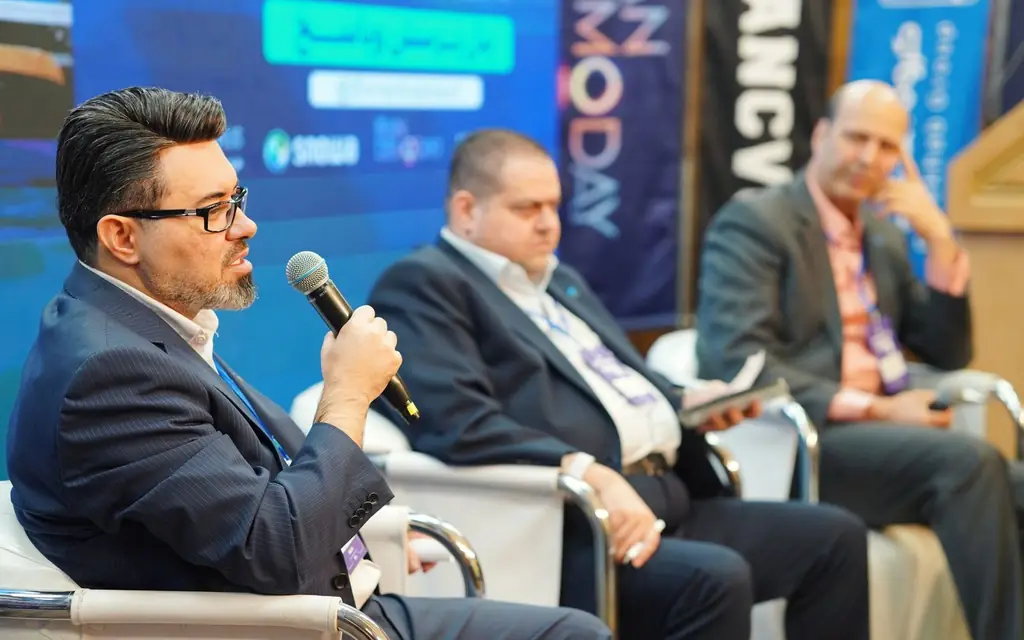
- Show days. Staff arrive before the doors open, buyers and VIPs come and go all day and evenings fill with dinners and receptions. Ground transport is split between a dependable shuttle and a few private cars.
- Move-out. The crowd disappears at closing and the pack-out begins. Staff finish late, are tired and need to reach airports and hotels in the small hours.
Plan each phase separately. A single "show transportation" booking that ignores the differences leaves gaps exactly where people are most tired.
Airport waves for exhibitors and buyers
Exhibitors often fly in groups and share hotels, which makes waves practical. Collect flight numbers and landing times, cluster guests who land within the same 45 to 60 minutes and book a vehicle for each wave. An Executive Sprinter carries up to 12 passengers with 12 bags, which suits a booth team with sample cases. Larger parties can move to a mini-coach or coach in the 20 to 56 seat range, on request.
Buyers and senior customers are different. They fly alone or in pairs, arrive on their own timetable and judge a supplier by the first ten minutes of their visit. A chauffeur waiting with a name board in arrivals, using an alias if you prefer, makes a better first impression than a text message with a shuttle location. Add the meet and greet service for those guests.
Flight tracking is included on every airport pickup, and free waiting time runs 60 minutes after international landings, 30 after domestic ones and 15 on other pickups.
Hotel to hall: the daily booth run
On show days, the question is when the first person needs to be at the stand. If the doors open at 9:00 and the team must be ready by 8:00, the shuttle needs to leave the hotel by 7:30 after allowing for security queues at the venue. Organiser shuttles often start later than the booth team wants, and they run as loops with no guaranteed times.
A private Sprinter or SUV for the booth team gets around that. It leaves when you say, drops at the exhibitor entrance and returns at closing, with the same driver each day if the booking is built that way. For teams of three to twelve it is often the simplest answer, and the Sprinter van with driver page explains the vehicle in more detail.
The organiser's shuttle remains a good choice for individuals who are not on a tight clock. A planner should treat it as the baseline and book private transport only where timing matters.
Hosting clients: dinners and receptions
Much of a trade show's value is made in the evening. A dinner for ten customers is a significant investment, and a late or confusing arrival undermines it. Executive cars sent to the hotel at an agreed time, with the guest list on the booking, mean customers never have to find a taxi in a queue of three hundred other delegates.
Three habits help:
- Send arrival instructions in advance. Tell guests where the car will wait and what the driver's name board will say.
- Brief the driver on the host. If a senior executive is joining mid-evening, add the leg to the itinerary so the car is there.
- Plan the return as carefully as the outbound. Hosts focus on the arrival and then find that guests are stranded at 11 pm.
For senior or sensitive guests, Discretion is standard: no photos of clients, no posts about journeys, NDAs on request. Onroutz.ca does not provide armed drivers or bodyguards.
Kerb timing on busy show days
Every large venue has a handful of places where cars are allowed to stop, and on the busiest morning they all fill at once. Drivers cannot wait where the marshals say they cannot, so the pickup point you name on the booking should be a place the venue actually permits. Ask the organiser, or read the exhibitor manual, before you choose between the main entrance, a side door and a hotel lobby nearby.
Two small habits cut delays. First, agree a pickup point one block away from the busiest entrance for the evening rush, and tell the driver in advance. A five-minute walk often saves twenty minutes in a stationary queue. Second, keep the team's phones charged and numbers shared. Most vehicles offer phone charging, and a driver who can text "two minutes away" saves a stranded group from standing in a crowd.
If the show spans several halls or buildings, name the exact hall in the booking. A pickup "at the convention centre" can mean four different doors.
Venue notes: Toronto and beyond
Each show city has its quirks, and the venue's own pages are the best source for current details.
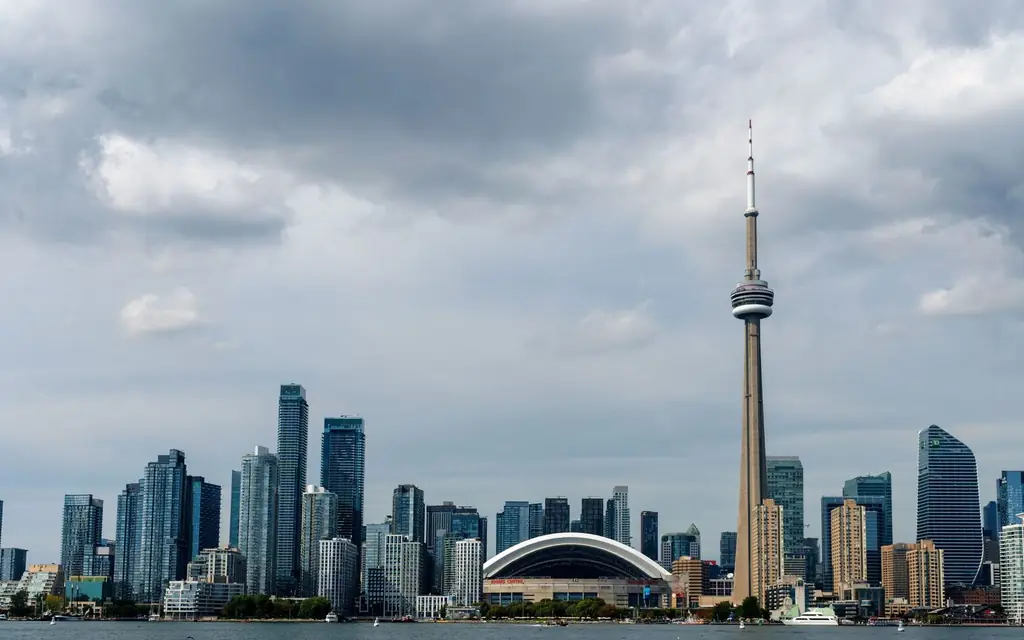
In Toronto, the Metro Toronto Convention Centre is downtown and describes itself as 25 minutes to the airport, with indoor access to public transit and an air-rail link to Pearson. Its exhibitor pages mention an easy move-in and move-out service, a service centre and online ordering. Check those before move-in so your passenger plan matches the freight plan.
Elsewhere, the main show cities have dedicated pages on this site, including CES in Las Vegas and the Canton Fair in Guangzhou. They cover local logistics for those events. For other cities, the desk uses a vetted, licensed and commercially insured local partner while the booking, support and invoice stay with Toronto.
Moving between hall and hotel: which option fits?
| Option | Best for | Strength | Weakness |
|---|---|---|---|
| Organiser shuttle | Individuals with a flexible day | Part of the registration, no booking needed | Fixed loops, queues at peak times |
| Private Sprinter | A booth team of 3 to 12 | Leaves on your clock, carries bags and samples | Needs a named schedule |
| Executive car | Buyers, senior clients, speakers | Door-to-door, private, professional | One party at a time |
| Taxi at the kerb | Spur-of-the-moment trips | No booking | Long queues at closing time |
International exhibitors and documents
International shows add paperwork, and ground transport is where missing documents surface. For a show in Canada, visitors who attend trade fairs usually enter as business visitors. The Government of Canada's business visitor guidance lists attending meetings, conferences, conventions and trade fairs as permitted activities, and sets conditions including a stay under six months and no entry into the Canadian labour market.
If you are bringing exhibit goods across a border, the Canadian Chamber of Commerce describes the ATA Carnet as a customs document for the temporary importation of goods, covering items such as trade fair materials. Details are on its carnet page. A carnet affects the freight, not the passengers, but both have to arrive at the venue on the same day.
Move-out: the hardest ride of the show
At closing, hundreds of tired people leave at once. Taxi queues build, shuttle loops fall behind and the exhibitors who still have crates to pack stay on until midnight or later. A pre-booked car at a fixed time, with the driver in a known place, is the dependable answer.
For airport departures, remember that the exhibition district at 6:00 pm is not the same as the exhibition district at 6:45 pm. Add a margin, and give the desk the flight number so the driver can track the departure as well. If a team is leaving the next morning, book the car for the real wake-up time, not the time you hope to wake up.
Planning checklist for exhibitors
- Confirm the venue's passenger drop-off points and vehicle access rules in the exhibitor manual.
- Gather flight numbers, hotel names and room blocks.
- Divide travellers into waves and decide which need private cars.
- Book hall runs for the booth team for every day, including move-in and move-out.
- Reserve cars for client dinners and add each guest's pickup.
- Add departures, with a margin for closing-day congestion.
- Share the driver contact and the 24/7 desk number with everyone on the team.
For larger corporate programmes that include a show alongside meetings and receptions, see corporate event transportation. Multi-city exhibition circuits are covered under roadshow transportation, and the events hub lists every event page. Regional detail is on the Toronto and USA pages.
Frequently asked questions
What is trade show transportation?
It is the passenger side of exhibiting: airport pickups, hotel and hall runs, client dinners and late departures. It does not include freight such as crates and displays. Onroutz.ca books the passenger legs on one confirmation with flight tracking and a 24/7 desk behind them.
Can you carry exhibit materials in the vehicle?
Within the vehicle's baggage capacity, yes. An Executive Sprinter takes up to 12 bags and a Luxury SUV five to six large bags. Describe any bulky items when you book. Crates, flooring and displays need a freight carrier booked through the venue's own system.
How early can a car collect our booth team?
Cars can be booked for any hour, including pre-dawn calls, because the desk is open 24/7. Give the booker the pickup time and the exhibitor entrance, and ask for the same driver across the show days if you prefer continuity.
Is the organiser's shuttle enough?
For individuals without a tight schedule, often yes. For a booth team that must be on the floor early, for buyers you are hosting or for late nights, a private car gives you control of timing. Many exhibitors use both, with private cars only where the clock matters.
Can you arrange cars in other show cities?
Yes. Outside Toronto and southern Ontario, the ride is delivered by a vetted, licensed and commercially insured local transfer partner, and the Toronto desk books, confirms, supports and invoices it. Partner vehicles are no more than four model years old.
What if the show runs late or the move-out is delayed?
Tell the driver or the 24/7 desk as soon as you know. Cars are matched to the real pickup time where possible, and flight tracking handles airport departures. Large events can carry a different cancellation deadline, printed on your confirmation.
Do you invoice companies monthly?
Yes. Corporate accounts receive monthly invoicing, which suits exhibitors with many small legs across a show week. Multi-leg itineraries sit on one booking, so finance receives a single document rather than a pile of receipts.
What is the cancellation policy?
More than 72 hours' notice has no charge. At 72 hours or less, 10% applies, at 48 hours or less 50%, and at 24 hours or less or a no-show 100%, counted from the scheduled pickup. If your trip falls during a major event, check the confirmation: the deadline may differ.