 United StatesJFK
 MexicoMEX
 BrazilGRU
 ArgentinaEZE
 ChileSCL
 ColombiaBOG
 PeruLIM
 PanamaPTY
 Costa RicaSJO
 Dominican RepublicPUJ
 JamaicaMBJ
 BahamasNAS
 BarbadosBGI
 United KingdomLHR
 IrelandDUB
 FranceCDG
 GermanyFRA
 NetherlandsAMS
 BelgiumBRU
 SwitzerlandZRH
 AustriaVIE
 ItalyFCO
 SpainMAD
 PortugalLIS
 GreeceATH
 TurkeyIST
 DenmarkCPH
 SwedenARN
 NorwayOSL
 FinlandHEL
 PolandWAW
 Czech RepublicPRG
 HungaryBUD
 IcelandKEF
 United Arab EmiratesDXB
 QatarDOH
 Saudi ArabiaRUH
 IsraelTLV
 EgyptCAI
 MoroccoCMN
 South AfricaJNB
 KenyaNBO
 NigeriaLOS
 IndiaDEL
 PakistanLHE
 Sri LankaCMB
 SingaporeSIN
 MalaysiaKUL
 ThailandBKK
 VietnamSGN
 PhilippinesMNL
 IndonesiaCGK
 Hong KongHKG
 ChinaPVG
 TaiwanTPE
 JapanHND
 South KoreaICN
 AustraliaSYD
 New ZealandAKL
Can you get into Tokyo and back from Haneda in six hours?
Yes, but only just: six hours leaves roughly an hour in the city. Trains run 23 minutes to Shibuya from Terminal 3, but immigration, customs and a buffer of about two and a half hours before an international departure take most of the layover. Seven or eight hours is where it feels like a visit.
Haneda is the layover airport that tempts people. It sits inside Tokyo's built-up area, the rail links are fast and the destinations travellers care about are on the first few stops. That is all true, and it is exactly why people miss flights from it. The train is the shortest part of the day.
The rest of this guide works through the day in order, from the paperwork to the final security line, with the published train times separated from the planning allowances we use for the parts nobody publishes. There are three loops, sized for six, seven and eight hours.
Why Haneda suits a short layover
Haneda's international terminal is Terminal 3, and its rail platforms are close to the arrivals area. Times from the airport to the main downtown stations are short. A fare and time table published for the airport lists them by terminal (Haneda Tokyo Access: fare and time search):
| From Terminal 3 | Time | From Terminals 1 and 2 |
|---|---|---|
| Shinagawa | 11 min | 14 min |
| Tokyo Station | 20 min | 23 min |
| Shibuya | 23 min | 26 min |
| Higashi-Ginza | 23 min | 26 min |
| Shinjuku | 30 min | 33 min |
| Asakusa | 34 min | 37 min |
Those are the published rail times by terminal. They do not include the walk from the gate to the platform, or from the destination platform to the street. Narita is a longer ride from central Tokyo; our comparison of Narita and Haneda sets out why Haneda is the one to plan a short layover around.
Before you land: entry paperwork and Visit Japan Web
Leaving the airport means entering Japan. That requires the right passport status, and a visa exemption or a visa. Whether you need a visa depends on your nationality, so check the official visa exemption list from the Ministry of Foreign Affairs of Japan before you plan any excursion; some passports can walk out and others cannot.
The paperwork itself is simpler than it used to be. Visit Japan Web is the government's online service for pre-registering immigration, customs and tax-free shopping information, and it generates a QR code that speeds up the arrival process. If you skip it, a paper customs declaration is available on the plane or in the airport's customs inspection area (Japan National Tourism Organization: customs and duty). The service is explained in our Visit Japan Web guide. Register at home on a laptop, not at the gate on a poor connection, because the QR codes save real minutes.
The immigration-to-kerb hour
The step that decides your layover is the first one, and nobody publishes a reliable figure for it. At Haneda, immigration lines depend on how many long-haul flights have landed in the same window. We plan on 45 to 75 minutes from the aircraft door to the arrivals hall for a passenger carrying only a cabin bag, and we plan on the long end if two or three wide-body flights landed within the hour.
Two practical questions to settle with your airline before you fly:
- Is your checked bag through-checked? If so, it may not be available to collect, and you leave with only your cabin bag. If it is not, collecting it adds time and requires re-checking later.
- What is the minimum connection and the check-in cut-off for your next flight? Your return time is set by the cut-off, not by the departure time.
Our guide to whether a one-hour layover is enough covers the same questions for much tighter connections.
Getting to the stations: Keikyu, Monorail or car
Haneda has two rail operators. The Keikyu Line runs to Shinagawa and on into the city, and the Tokyo Monorail runs to Hamamatsucho. Haneda's access page describes the Keikyu ride to Shinagawa as about 15 minutes and the Monorail to Hamamatsucho as about 20 minutes (the airport labels these as estimates, and they differ by a few minutes from the operator's table above, depending on terminal and train type), and notes that the Keikyu and Monorail platforms at Terminals 1 and 2 are on the first basement level, while at Terminal 3 the gates sit on the second-floor arrivals level (Haneda Airport: trains and monorail). The Tokyo Monorail's own fare table lists a ticket fare of ¥520 (¥519 on an IC card) from the Haneda terminal stations to Hamamatsucho (Tokyo Monorail: fares).
The road distance from Haneda is about 15 km (9 mi) to Ginza and about 20 km (12 mi) to Tokyo Station, Shibuya or Asakusa. Our routing check gives roughly 15 to 25 minutes without traffic, and our planning allowance for a car or taxi is 30 to 60 minutes depending on the hour and the expressway.
| Mode | Time to central Tokyo | Cost note (as of 2026) | Luggage | Best for |
|---|---|---|---|---|
| Keikyu Line | 11 – 37 min depending on destination | Fare by distance; IC card works | Fine with a cabin bag | Shinagawa, Shibuya, Ginza, Asakusa |
| Tokyo Monorail | About 20 min to Hamamatsucho (airport estimate) | ¥520 ticket, ¥519 IC | Fine with a cabin bag | Hamamatsucho, Tokyo Station area |
| Taxi | 30 – 60 min | Metered | Easy | Groups, late nights |
| Pre-booked private car | 30 – 60 min | Fixed fare via the booker | Door to door | Families, tired arrivals, a fixed return time |
The taxi and car times are Onroutz.ca planning allowances; the rail times are the operators' and the airport's estimates.
Loop one: Shibuya in a six-hour layover
Six hours leaves about an hour in the city, so choose one place.
- 0:00 Landing.
- 0:00 to 1:00 Aircraft to arrivals hall, with a cabin bag and a QR code ready.
- 1:00 to 1:35 Train from Terminal 3 to Shibuya (23 minutes) plus the walk to the platform and a station exit.
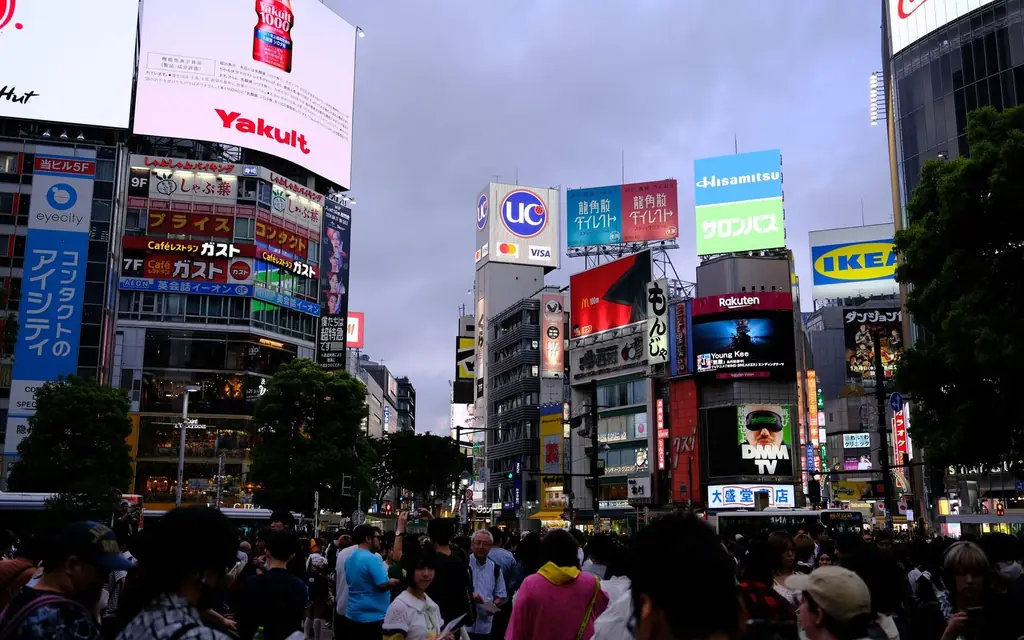
- 1:35 to 2:35 One hour: the scramble crossing, a coffee, a look from a rooftop.
- 2:35 to 3:15 Back to the station and the train to Haneda.
- 3:15 to 5:45 Terminal 3, bag drop, security and departure immigration, with a two-and-a-half-hour margin.
Tokyo's stations are large, and Shibuya is among the most confusing. The exit you choose can add ten minutes to the walk, so check the exit before you leave the platform.
Loop two: Ginza in a seven-hour layover
An extra hour changes the quality of the stop. Higashi-Ginza is 23 minutes from Terminal 3, and the area around Ginza, with its department stores, side-street cafés and food halls, handles a short visit well because everything is within a few blocks.
The loop follows the same arithmetic: one hour for entry, 35 minutes in, two hours in the city, 40 minutes back and the 2.5-hour buffer, which adds up to about 6 hours 45 minutes. It leaves little slack, so a late train on the way back is the trip's biggest threat. This is a good plan for a first-timer who wants a sit-down lunch and a walk rather than a checklist.
Loop three: Asakusa in an eight-hour layover
Asakusa is the farthest of the three, at 34 minutes from Terminal 3 and 37 from Terminals 1 and 2, and it is the one that needs eight hours to be worthwhile. With a one-hour entry, about 45 minutes each way including walking, and a 2.5-hour buffer, you have about three hours at the temple and the market streets.
Plan the visit around the temple's own hours, which change by season, and remember that shops on the shopping street set their own closing times, often earlier than in the commercial centres. Check the temple's website for the day you travel. Arriving early gives you the quietest hour.
For anything beyond these three, the Haneda to Tokyo transfer page and the Haneda to Shinjuku page cover road routes, and the Tokyo Station rail page explains pick-ups at the station itself.
The return trip: buffer, bags and the IC card
The return is where layovers fail. Four habits help.
- Set an alarm for the leave-the-city time, not the flight time. Work backward: the flight time minus the check-in cut-off, minus the buffer, minus the train and the walk.
- Be at Terminal 3 about two and a half hours before departure. That covers bag drop, security and departure immigration for an international flight, and it covers a slow queue. Our guide to how early to get to the airport for an international flight explains the logic.
- Use an IC card for trains. Japan's rechargeable transport cards save the time spent buying tickets. The Monorail's fare table lists separate IC and ticket fares, and the difference is a yen.
- Do not shop for bulky items. Anything you cannot carry on adds a stop at the check-in counter.
If you are changing airports, for example arriving at Narita and leaving from Haneda, you are no longer on a layover. That is an airport transfer, covered by the Narita to Haneda page, and it needs a much larger time budget than the train times suggest.
Taxis and private cars
A taxi or car is the practical choice when the group is three or more, when there are children or when the weather is poor. A car puts your bags in the boot and avoids the station transfers, which in Tokyo can mean long walks and stairs. It also means that the return trip is fixed in advance, with a driver who knows when to leave Tokyo for your flight, rather than a train you hope to catch.
A driver can track your flight, so a delayed landing moves the pick-up rather than ruining it, and a name-board pick-up inside arrivals puts a person at the door when you come through customs. The fare is quoted before you pay, and it covers the road distance of about 15 to 20 km (9 to 12 mi) each way.
When to stay airside
Be honest about this. If the layover is under about six hours, the immigration queue is long, or your passport needs a visa you do not have, stay at the airport. Haneda has restaurants and shops, and a good meal and a shower beat a rushed forty minutes in Shibuya.
The same applies to bad weather, a late inbound flight or a first trip to Japan where the station signage is the main challenge. A smaller plan done calmly is better than a large one done in a panic. If you are travelling on, the Asia-Pacific hub lists the other airports we cover, and if your trip continues by rail, our note on whether a Japan Rail Pass is worth it may be useful.
Frequently asked questions
Can you leave Haneda Airport on a layover?
Yes, if your passport allows entry into Japan, either through a visa exemption or a visa. You pass through immigration and customs, then re-enter through the departure process. Allow at least six hours in total, and seven or eight for a relaxed visit.
How long does it take to get from Haneda to Shibuya?
About 23 minutes by train from Terminal 3 and 26 minutes from Terminals 1 and 2, according to the Haneda access table. Add walking time at both ends. By road, the distance is about 20 km (12 mi), roughly 20 minutes without traffic, and our planning allowance is 30 to 60 minutes.
How long does it take to get from Haneda to Asakusa?
Train times are 34 minutes from Terminal 3 and 37 minutes from Terminals 1 and 2. It is the farthest of the common layover destinations, so it is best saved for a layover of eight hours or more.
What is Visit Japan Web?
It is the Japanese government's online service for pre-registering immigration, customs and tax-free shopping information. It produces a QR code that speeds up arrival. If you do not use it, a paper customs declaration is available on the plane or at the airport.
How much is the Tokyo Monorail from Haneda?
The Tokyo Monorail's fare table lists ¥520 by ticket and ¥519 by IC card from Haneda's terminal stations to Hamamatsucho, which the airport estimates at about 20 minutes. Keikyu Line fares depend on the destination; check the operator's fare search.
Should I leave my checked bag at the airport?
It depends on the ticket. If your bags are through-checked to your final destination, ask your airline whether you can leave the airport at all with the booking. If they are not, collecting them adds time. A cabin-bag-only loop is the simplest.
Is Haneda better than Narita for a short layover?
Almost always. Haneda's rail times to central Tokyo are 11 to 37 minutes, against a longer ride from Narita. Our comparison of the two airports covers the detail.