 United StatesJFK
 MexicoMEX
 BrazilGRU
 ArgentinaEZE
 ChileSCL
 ColombiaBOG
 PeruLIM
 PanamaPTY
 Costa RicaSJO
 Dominican RepublicPUJ
 JamaicaMBJ
 BahamasNAS
 BarbadosBGI
 United KingdomLHR
 IrelandDUB
 FranceCDG
 GermanyFRA
 NetherlandsAMS
 BelgiumBRU
 SwitzerlandZRH
 AustriaVIE
 ItalyFCO
 SpainMAD
 PortugalLIS
 GreeceATH
 TurkeyIST
 DenmarkCPH
 SwedenARN
 NorwayOSL
 FinlandHEL
 PolandWAW
 Czech RepublicPRG
 HungaryBUD
 IcelandKEF
 United Arab EmiratesDXB
 QatarDOH
 Saudi ArabiaRUH
 IsraelTLV
 EgyptCAI
 MoroccoCMN
 South AfricaJNB
 KenyaNBO
 NigeriaLOS
 IndiaDEL
 PakistanLHE
 Sri LankaCMB
 SingaporeSIN
 MalaysiaKUL
 ThailandBKK
 VietnamSGN
 PhilippinesMNL
 IndonesiaCGK
 Hong KongHKG
 ChinaPVG
 TaiwanTPE
 JapanHND
 South KoreaICN
 AustraliaSYD
 New ZealandAKL
Is the Japan Rail Pass worth it now?
It depends on how many long Shinkansen legs you ride. The 7-day ordinary pass is 50,000 yen online, so add up the current single-ticket fare for each long leg on JR's own fare tools or SmartEX, and buy the pass only if the total clearly beats 50,000 yen. A light loop with two or three long rides is the case most likely to fail that test.
The Japan Rail Pass used to be the obvious purchase for anyone planning more than a Tokyo to Kyoto return. The price revision of October 2023 changed that, and many older guides still describe the pass at its old, much lower price. The pass is not a bad product, but the break-even point moved up. This guide uses only the prices the pass operator publishes, shows you how to run the sum on your own itinerary, covers the part many guides skip (the Nozomi rule), and explains where a car at the airport end can beat both the pass and the express train.
Prices are in yen. Exchange rates move, and the pass is charged in yen when bought online, so convert at the rate on the day you buy.
What the pass costs in 2026
The official JAPAN RAIL PASS price page lists two classes and three durations. When purchased online, the ordinary-car adult prices are 50,000 yen for 7 days, 80,000 yen for 14 days and 100,000 yen for 21 days. The Green Car (first class) adult prices are 70,000, 110,000 and 140,000 yen. Child prices, for ages 6 to 11, are half. A purchase through an overseas agent costs more: 53,000, 84,000 and 105,000 yen for the ordinary 7-, 14- and 21-day adult passes.
Older guides and videos quote the pre-October 2023 prices, which were far lower, so ignore any figure that does not match the table above. The 21-day pass has the lowest cost per day, but only if you really travel for three weeks.
The operator notes that prices are subject to change, and that online purchases are settled in yen, with the local-currency price converted when the exchange order is issued.
What it covers, and what it does not
The pass covers the JR Group's network: Shinkansen bullet trains (with the Nozomi and Mizuho exception below), limited express trains, express trains and local trains, JR local bus lines and the BRT, the JR West ferry between Miyajima and Miyajimaguchi, and the Tokyo Monorail, according to the scope of validity page. It does not cover private railways, where the operator's own fare is paid separately, JR express bus routes, or subways run by other operators.
That list shapes the maths. A trip that mixes the Shinkansen with the Tokyo Metro and Osaka's subway needs local fares on top. The usual solution is a prepaid IC card such as a Suica, tapped on local trains, subways and buses, which is not part of the pass. The pass covers the long-distance legs, not the daily moving around.
The Nozomi problem
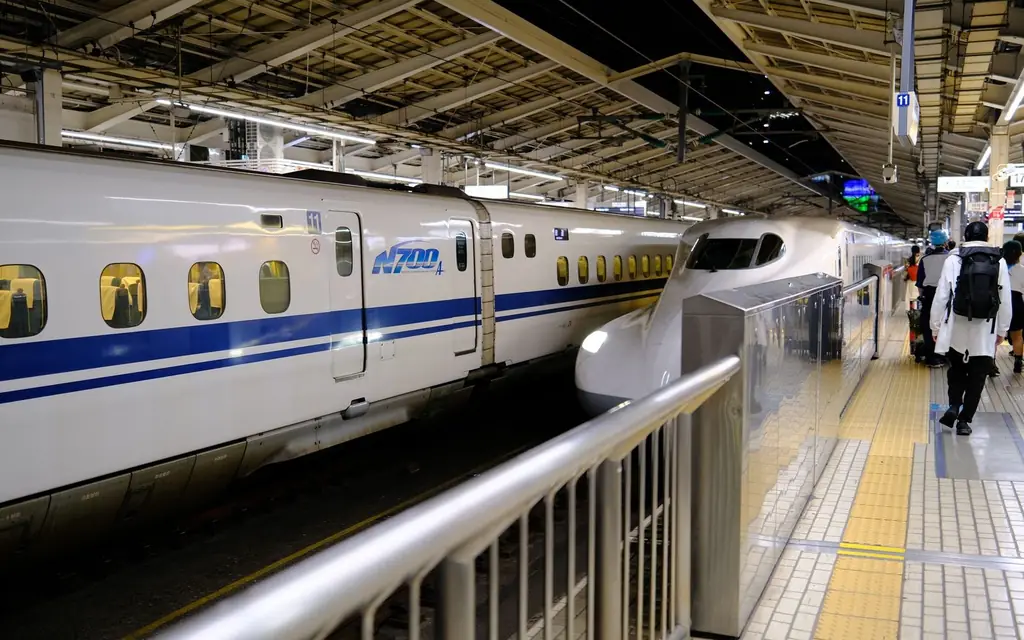
The fastest trains on the Tokaido and Sanyo lines are the Nozomi and the Mizuho. The pass is not valid for any seat on them, reserved or non-reserved. You use the Hikari or the Kodama instead, or you buy a separate ticket.
The pass operator's special ticket page explains that a pass holder can buy an [ONLY WITH JAPAN RAIL PASS] Nozomi Mizuho Ticket before boarding. Main prices, tax included:
| Section | Nozomi/Mizuho ticket for pass holders |
|---|---|
| Tokyo to Nagoya | 4,180 yen |
| Tokyo to Kyoto | 4,960 yen |
| Tokyo to Shin-Osaka | 4,960 yen |
| Tokyo to Hiroshima | 6,500 yen |
| Shin-Osaka to Hakata | 4,960 yen |
| Hakata to Kagoshima-Chuo | 5,150 yen |
The ticket must be bought each time you ride a Nozomi, from one month before travel and only while you hold a valid pass. Central Japan Railway also states that during major peak periods all seats on Nozomi trains are reserved. The 2026 peak periods are listed on JR Central's Nozomi page. For pass holders this means that riding Hikari is free and simple, but a Hikari can take noticeably longer between Tokyo and Osaka, and a traveller in a hurry may end up paying anyway.
Who is eligible
The pass is a ticket for foreign tourists. The operator's eligibility page says you must enter Japan under the "Temporary Visitor" status, and that a stamp or sticker in the passport is what shows it. One practical trap: if you use an automated gate at the airport, no stamp is made. You need to use a manned gate or ask a clerk to apply the stamp, or you cannot exchange or use the pass. Trusted Traveler Program members show their registered user card instead of the stamp.
Route-by-route maths
Single-ticket fares change and differ by train type and seat class, so this guide prints none of them. Instead it gives you the method and the official numbers that do not change from day to day: the pass prices and the Nozomi supplements above. Look up each leg's fare on JR Central, JR East or JR West's own fare tools or on SmartEX, the online booking service for the Tokaido, Sanyo and Kyushu Shinkansen, and write the numbers down.
How to run the sum in five steps.
- List every long ride you actually plan, with the date. Short local hops do not count, because a prepaid IC card covers those either way.
- Look up the single fare for each leg, ordinary car, on the type of train you would really take.
- Add the totals. If the total is below the pass price, buy single tickets.
- If you want the Nozomi on any leg, add the pass-holder supplement for that leg from the table above. A pass holder who rides the Nozomi from Tokyo to Shin-Osaka and back pays 2 x 4,960 = 9,920 yen on top of the pass, so a 7-day ordinary pass plus those two rides is 59,920 yen. For Tokyo to Hiroshima and back it is 2 x 6,500 = 13,000 yen, making 63,000 yen with the 7-day pass.
- Compare. The pass wins only when your single-ticket total for the same rides is higher than the pass price, plus any supplements you chose to pay.
1. Tokyo, Kyoto, Osaka and back (7 days). The long rides are Tokyo to Kyoto and Osaka back to Tokyo; Kyoto to Osaka is a short hop on a JR rapid train. Day trips to Nara or Himeji add short rides, not long ones. With only two long Shinkansen rides, this is the itinerary most likely to cost less on single tickets, but run the five steps above with today's fares, because that is the only number that settles it.
2. Tokyo to Hiroshima and back, plus Kyoto and Osaka (7 days). Here the long rides multiply: Tokyo to Kyoto or Osaka, onward to Hiroshima, and the return. This is the profile where a 7-day pass is most likely to come out ahead, and it has a bonus, because the Miyajima ferry is covered. Take Hikari and Kodama trains and you pay no Nozomi supplement; insist on the Nozomi and the 6,500 yen supplement each way for Tokyo to Hiroshima narrows the gap. Run the steps with real fares before you decide.
3. Tokyo, Kanazawa, Kyoto, Osaka, Hiroshima, Tokyo (14 days). This is the kind of circuit the 14-day pass at 80,000 yen was designed for, with several long legs and many side trips. It tends to favour the pass if you travel every few days, but again the single-ticket total is the test.
4. Mostly Tokyo with a day trip to Mount Fuji or Nikko. A short rail return plus local trips is a very different profile from a national pass. See our Mount Fuji day trip from Tokyo for how those excursions work. A regional pass or single tickets are usually the better fit, and the sum above will confirm it.
The common pattern: the pass pays off when you cover several long Shinkansen legs in a week, or many across two weeks. Two long legs and a few commutes rarely justify the national pass price, so test it first.
Airport legs: where a car beats the pass
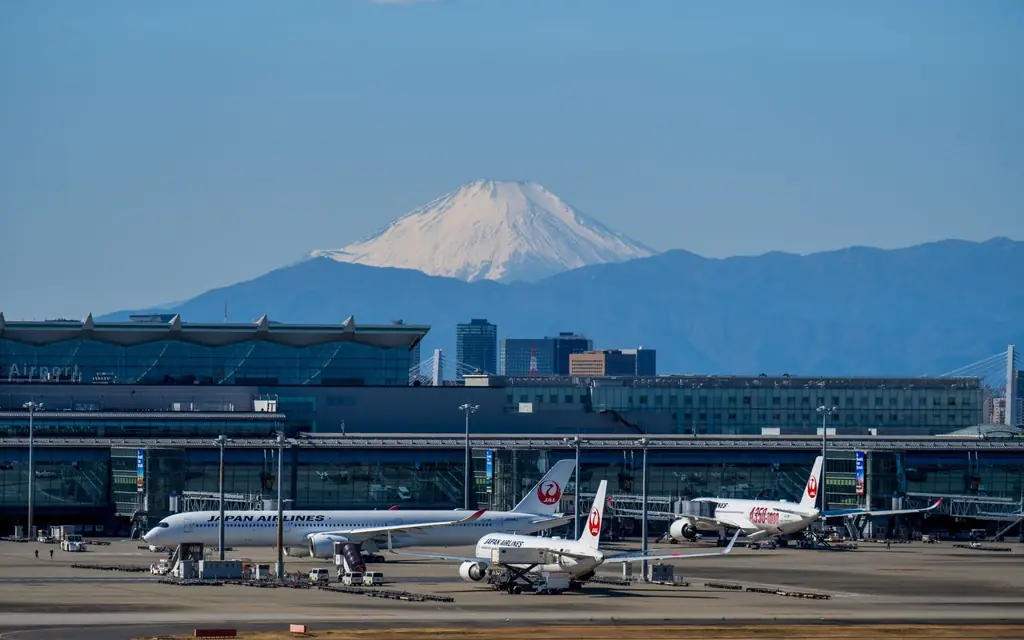
The pass is attractive on paper because it includes airport links. The operator's scope page lists the Tokyo Monorail, which serves Haneda, and the pass covers JR Group lines in general, so check the scope page for the specific airport train you plan to use. But an airport transfer is one short ride, and a pass valid for a full week does not reward you for it. For scale, the Tokyo Monorail's own fare table lists 520 yen as a single ticket from Haneda Terminal 3 to Hamamatsucho. If your pass period starts on the day you land, you spend a pass day on a ride like that.
Two cases favour a car. The first is a late arrival: a flight that lands near the end of train service and reaches Tokyo or Osaka after the last trains has no pass benefit, and a transfer is the only reasonable option. The second is luggage and a long hotel walk: Tokyo's stations are large, escalators are plentiful but crowded, and a traveller with two cases and a connection on the subway pays for it in effort. A car goes from the arrivals hall to the hotel door.
Road numbers: Haneda to Tokyo Station is about 20 km (13 mi), roughly 25 minutes without traffic; Narita to Tokyo Station is about 70 km (43 mi), roughly 65 minutes without traffic; Kansai Airport to Kyoto Station is about 100 km (61 mi), roughly 1 h 45 without traffic. Allow considerably longer at rush hour or on a holiday weekend, when the expressways into Tokyo and the roads to Kyoto slow down. Our pages on Haneda to Tokyo, Narita to Tokyo and Kansai Airport to Kyoto explain how arrival pickups work. If you are weighing the two Tokyo airports, our post on Narita versus Haneda compares them.
Comparison: pass, single tickets and a regional pass
| Option | Best for | Cost note | Catch |
|---|---|---|---|
| National pass, 7 days ordinary | Heavy week of long Shinkansen legs | 50,000 yen online (official, 2026) | Nozomi needs a separate ticket, from 4,180 to 6,500 yen on main routes |
| National pass, 14 or 21 days | Multi-region circuit | 80,000 or 100,000 yen online | Only pays if you travel most days |
| Single tickets on SmartEX or at stations | Short itineraries, Tokyo plus Kyoto | Pay per trip; compare the total with the pass | Peak-season reserved seats sell out |
| Regional passes (for example a limited-area pass) | A trip focused on one region | Priced by area | Valid only in the named area |
| Car for airport legs | Late arrivals, luggage, hotel door to door | Fixed fare via the booker | Not a long-distance substitute |
The pass operator itself points to limited-area passes for travellers who "have specific areas that I want to visit" and will only be in Japan for a few days. Those are priced by region and are usually the better choice for a one-region trip.
Mistakes people make with the pass
- Buying it before sketching the legs. Write down every long trip, put a rough fare beside each, and compare.
- Wasting day one. Check the start-date rules when you exchange the pass, and aim for day one to be your first long ride, not the airport transfer.
- Counting on Nozomi. The cheaper Hikari takes longer between Tokyo and Osaka.
- Skipping the entry stamp. An automated gate leaves no stamp, and without it you cannot exchange the pass.
- Ignoring local fares. Subways and private railways are extra.
- Not checking the cherry blossom or autumn peak. Reserved seats on busy days sell out. Our guide to cherry blossom season in 2027 shows how crowded travel gets.
For entry paperwork before you land, see our Visit Japan Web guide, and for city-by-city transfers across the region, start at the Asia-Pacific hub. The Tokyo Station rail transfer page explains how a car meets a Shinkansen arrival.
Frequently asked questions
How much is the Japan Rail Pass in 2026?
Online, the ordinary-car adult prices are 50,000 yen for 7 days, 80,000 yen for 14 days and 100,000 yen for 21 days. Green Car passes are 70,000, 110,000 and 140,000 yen. Overseas agents charge somewhat more, such as 53,000 yen for the 7-day ordinary pass.
Is the Japan Rail Pass worth it for Tokyo, Kyoto and Osaka?
Add up the single fares for your long legs on JR's fare tools or SmartEX and compare the total with the 50,000 yen price of the 7-day pass. With only two long rides the pass is the harder case to justify; extra long legs, such as Hiroshima or Kanazawa, are what tip it.
Can I use the Nozomi with a Japan Rail Pass?
Not with the pass alone. Pass holders can buy a separate Nozomi Mizuho ticket before boarding: for example 4,960 yen from Tokyo to Kyoto or Shin-Osaka and 6,500 yen from Tokyo to Hiroshima.
Who can buy the Japan Rail Pass?
Foreign tourists who enter Japan under "Temporary Visitor" status. The passport must carry the stamp or sticker, which is not applied when you use an automated gate, so ask a clerk or use a manned gate.
Does the pass cover the subway?
No. It covers JR Group lines and the Tokyo Monorail, but not subways or private railways. Many travellers use a prepaid IC card such as Suica for those.
Does the pass cover airport trains?
The operator's scope page lists the Tokyo Monorail to Haneda as covered. Private railways are not covered, and the pass covers JR Group lines in general, so check the scope page for the specific airport train. Private lines such as the Keisei Skyliner are separate.
When is a car better than the train from the airport?
For late arrivals, heavy luggage, families and door-to-door trips to a hotel away from a major station. By road, Haneda is about 20 km (13 mi) from Tokyo Station, Narita about 70 km (43 mi) and Kansai Airport about 100 km (61 mi) from Kyoto Station.