 United StatesJFK
 MexicoMEX
 BrazilGRU
 ArgentinaEZE
 ChileSCL
 ColombiaBOG
 PeruLIM
 PanamaPTY
 Costa RicaSJO
 Dominican RepublicPUJ
 JamaicaMBJ
 BahamasNAS
 BarbadosBGI
 United KingdomLHR
 IrelandDUB
 FranceCDG
 GermanyFRA
 NetherlandsAMS
 BelgiumBRU
 SwitzerlandZRH
 AustriaVIE
 ItalyFCO
 SpainMAD
 PortugalLIS
 GreeceATH
 TurkeyIST
 DenmarkCPH
 SwedenARN
 NorwayOSL
 FinlandHEL
 PolandWAW
 Czech RepublicPRG
 HungaryBUD
 IcelandKEF
 United Arab EmiratesDXB
 QatarDOH
 Saudi ArabiaRUH
 IsraelTLV
 EgyptCAI
 MoroccoCMN
 South AfricaJNB
 KenyaNBO
 NigeriaLOS
 IndiaDEL
 PakistanLHE
 Sri LankaCMB
 SingaporeSIN
 MalaysiaKUL
 ThailandBKK
 VietnamSGN
 PhilippinesMNL
 IndonesiaCGK
 Hong KongHKG
 ChinaPVG
 TaiwanTPE
 JapanHND
 South KoreaICN
 AustraliaSYD
 New ZealandAKL
Is Visit Japan Web necessary, and is it still required in 2026?
Japan Customs requires every passenger entering Japan to submit a declaration. It recommends doing so electronically through Visit Japan Web, which gives you a 2D (QR) code to scan at the airport. The paper declaration form is still accepted, so the website is the recommended route rather than the only one.
That distinction answers the question most travellers actually have. You cannot skip the declaration. You can choose how you make it. The Visit Japan Web route generates a code that you hold over a scanner at an electronic terminal, and the paper route means filling in a form on arrival or printing it at home on A4 paper beforehand.
Japan Customs' page also states that codes from the older Customs Declaration App stopped working on 25 January 2024, so a screenshot from an old app is worthless. If you used Japan's earlier tools on a past trip, start a fresh declaration on Visit Japan Web.
A note on scope. This article draws on what Japan Customs publishes about its own process. Visit Japan Web also has an immigration side, and we have not verified the current status of that part on an official source for this guide, so check the Immigration Services Agency of Japan for what applies to your passport.
The next sections cover the customs steps, the e-gates and the integrated kiosks, the duty-free limits that make declaring worthwhile, and what the whole thing means for the time between landing and meeting a driver.
How does the Visit Japan Web QR code work?
You log in to Visit Japan Web, enter your declaration details, and receive a 2D code that contains them. Japan Customs describes the next steps at the airport: hold the code and your IC passport over the scanner at the electronic declaration terminal in the customs inspection area, then pass through the electronic declaration gate. Some inspection desks also have terminals for the same purpose.
An IC passport is a passport with a chip, shown by the chip symbol on the cover. You need it for the e-gate. If you have a non-chip passport, you can still use the kiosks but not the gate, and you will be directed to an officer.
Electronic declaration does not exempt you from inspection. Customs officers may still check your baggage, and you may be selected at random or because of your answers. The code speeds up the paperwork; it does not remove the officer.
To use the system well, save the QR code offline before you fly, because mobile data on landing is not guaranteed. A screenshot works, as does a printout.
Which airports have e-gates and kiosks?
Japan's electronic customs declaration gates are at seven airports: New Chitose, Narita, Haneda, Chubu Centrair, Kansai, Fukuoka and Naha. The gate requires an IC passport. Each traveller, including every family member, completes the terminal procedure individually. Children under 100 cm can pass the gate with a family member, and wheelchair users can pass through in their chair.
There is also an integrated kiosk system that combines immigration and customs in a single step. According to Japan Customs, it is available at Narita Terminal 3, Haneda, Kansai and Fukuoka, with start dates and operating hours listed in the linked PDFs on its site. Here is how it works:
- You complete the electronic declaration on Visit Japan Web, which generates a 2D code containing both customs and immigration information.
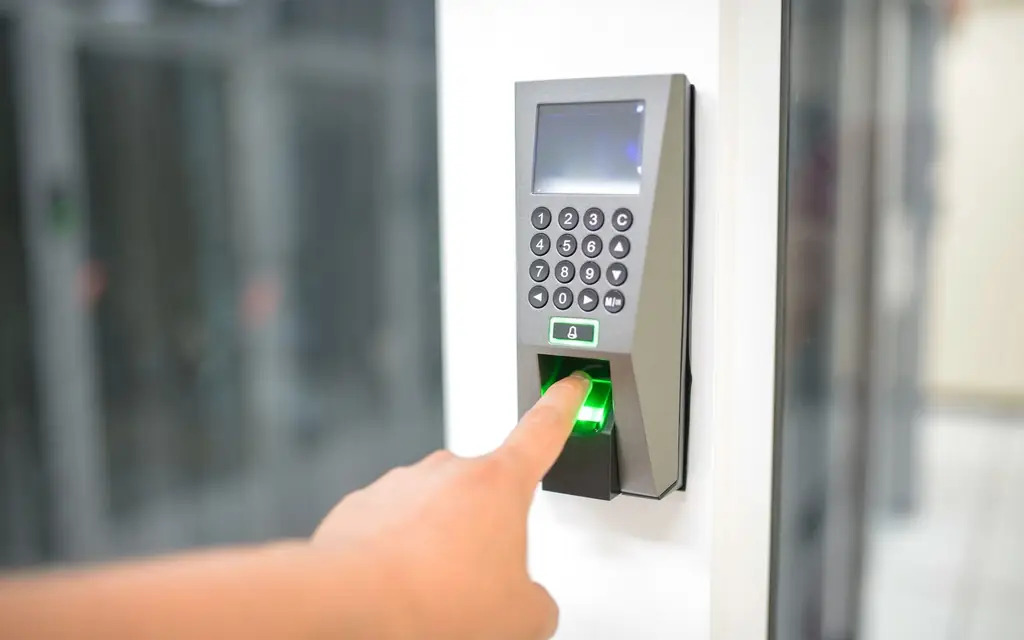
- At the kiosk you scan the code and your IC passport. The kiosk takes a photo and matches it to the passport image.
- The kiosk displays a letter, a, b, c or d, and you follow the marked route to a dedicated immigration booth.
- If you do not need a customs inspection, you pass through an electronic gate using facial recognition. Travellers with goods over the duty-free allowance or unaccompanied articles may be sent to an inspection desk.
Two limits are worth knowing. Travellers under 135 cm are not eligible for the kiosk, and masks, sunglasses and face coverings must come off for the photo. Non-chip passport holders can use the kiosk but cannot use the electronic gate afterwards.
What does the declaration save you?
Japan Customs says the integrated kiosks reduce duplication and total processing time, because passport information, the facial photo (plus fingerprints for foreign nationals going through immigration) and the declaration are submitted together. It does not publish a minutes-saved figure, and neither will we.
The honest framing is this. The code replaces filling in a form while standing in a hall, and it routes you toward the electronic gate. On a quiet morning the saving may be a few minutes; at the end of a busy arrival bank it is the difference between the gate and a queue for a counter. Families benefit most, because they otherwise juggle one form per adult and a pen.
| Route | What you need | What you do on arrival | Best for |
|---|---|---|---|
| Visit Japan Web with e-gate | IC passport, QR code | Scan code and passport at terminal, pass the gate | Most travellers with a chip passport |
| Integrated kiosk (Narita T3, Haneda, Kansai, Fukuoka) | IC passport, QR code with immigration and customs data | Scan, photo, follow letter route to immigration booth | Travellers at participating terminals |
| Paper declaration | A4 form, printed or on arrival | Hand to the officer | Travellers without a phone or chip passport |
What can you bring in? Duty-free allowances
Declaring is easier when you know the limits. Japan Customs lists these allowances per adult:
- Alcohol: three bottles of about 760 cc each.
- Tobacco: 200 cigarettes, or 50 cigars, or 250 grams of other tobacco, and heat-not-burn products have their own limits.
- Perfume: two ounces.
- Other goods: a total overseas market value under 200,000 yen, with items worth under 10,000 yen not counted. No allowance applies to a single item or set worth more than 200,000 yen.
If you have nothing dutiable and nothing prohibited or restricted, use the green channel. Otherwise use the red channel and pay any duty in the customs zone. You must also declare cash or other payment means over 1 million yen, or the equivalent in other currencies.
Prohibited and restricted items are listed on the Customs site, which also carries a warning that drug smuggling is a serious crime for foreign visitors. Read it before you pack medication or anything you are unsure about.
From airport to city: Narita and Haneda compared
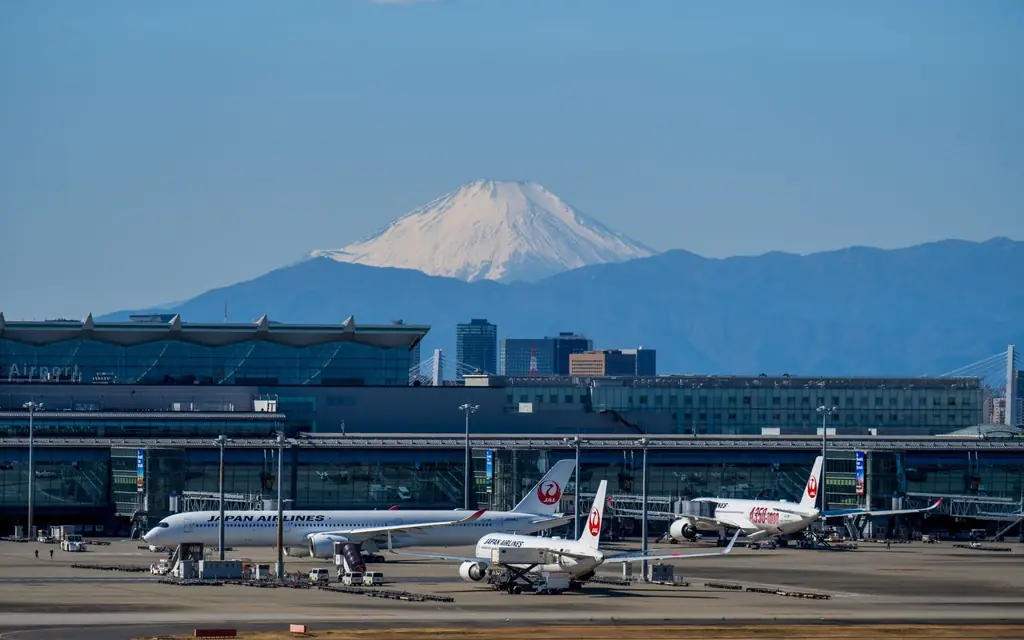
Narita is the farther airport. The road distance to Tokyo Station is about 70 km (43 mi), roughly 65 minutes without traffic. Haneda is far closer, at about 19 km (12 mi) to Tokyo Station, roughly 20 minutes without traffic (OpenStreetMap road-routing data, free-flow). Peak hours run longer at both.
Haneda's own site gives rail estimates from the airport: about 15 minutes to Shinagawa, 20 to Hamamatsucho, 30 to Tokyo Station and 50 to Shinjuku. Narita's official taxi page lists a fixed-fare table by Tokyo zone; for Shinjuku and other zone D wards, the fare is ¥31,500 via the Keiyo Road before highway tolls, as of 2026, with late-night and early-morning surcharges between 22:00 and 5:00.
| Mode | Door-to-door time | Cost note | Luggage | Best for |
|---|---|---|---|---|
| Rail from Haneda | About 30 min to Tokyo Station by rail, plus walking | Operator fares | Stairs and platforms | Light packers, Shinagawa or Tokyo Station hotels |
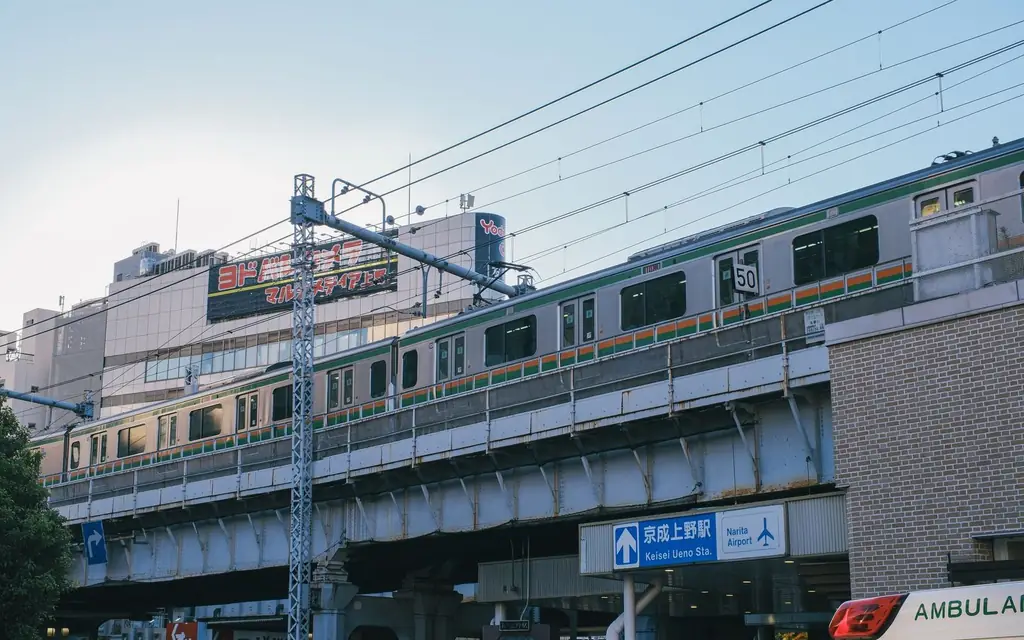
| Rail from Narita | Check the operators; trains serve Tokyo Station, Shinjuku, Ueno and Nippori | Operator fares | Limited space on busy trains | Solo travellers, central stations |
| Fixed-fare taxi from Narita | Road time plus kerb wait | ¥31,500 to zone D before tolls (as of 2026) | Boot-dependent | Small groups |
| Private transfer | Narita about 65 min; Haneda about 20 min (without traffic) | Fixed fare shown in the booker before you pay | Sized to the vehicle class | Families, late arrivals, heavy luggage |
The train is the better choice when your hotel sits beside a station and you travel light. The private car wins with children, large cases, a late landing or a hotel in a district without easy rail. See Narita to Tokyo, Haneda to Tokyo, Narita to Shinjuku and Haneda to Shinjuku for route detail. If you cannot decide between airports, our article on Narita versus Haneda walks through the trade-offs.
Meeting your driver after the declaration
Once you pass the customs gate or desk, you are in the public arrivals hall. A chauffeur with a name board meets you inside arrivals on request, and every airport pickup is flight-tracked. International landings carry 60 minutes of free waiting, a window designed to absorb immigration, baggage and customs, which in Japan can vary widely between a quiet and a busy hour.
If you are arriving at Kansai for Osaka or Kyoto, the process is the same, with the same e-gate and the integrated kiosk available there. Our Kansai Airport to Osaka and Kansai Airport to Kyoto pages cover those pickups. For rail travel beyond Tokyo, see our note on whether a Japan Rail Pass is worth it.
The wider picture sits on our Asia-Pacific hub, and the airport transfer hub lists every airport.
Mistakes that slow people down at Japanese customs
The most common is carrying the wrong code. A QR code from the retired Customs Declaration App does nothing, and a code from a previous trip does not cover a new arrival. Generate a fresh one for each entry.
The second is a non-chip passport, which sends you to a desk when the person ahead of you walks through the gate. The third is a family that registers one adult and assumes the children are covered; each person completes the terminal procedure individually, so each needs to be set up in the system and to carry the passport.
The fourth is arriving with a phone that has no battery. Screenshot the code, keep a printout in your carry-on, and keep a power bank where you can reach it. The fifth is forgetting that the declaration covers goods as well as cash: if you carry more than 1 million yen in cash or equivalent, you must declare it.
A short checklist before you fly
Register on Visit Japan Web a few days before travel, adding every family member. Save the QR code offline. Confirm your passport has the chip symbol. Know your terminal, and check your hotel address in both English and Japanese script, since it helps if your driver or a taxi needs it. Pack medicines in their original packaging, and read the prohibited items list.
On the day, remove masks and sunglasses before the photo, follow the letter route at the kiosk and keep the QR code open on your phone until you pass the gate. If anything fails, the officers at the desk will take over, and the paper form is the fallback.
Frequently asked questions
Is a Visit Japan website necessary?
Declaring is required; the website is the recommended method. Japan Customs says all passengers entering Japan must submit a declaration and recommends doing it through Visit Japan Web. Paper forms are still accepted.
Where can I find a QR code for Japan?
On Visit Japan Web, after you enter your declaration details. Japan Customs says you will receive a 2D code to scan at the electronic terminal. Codes from the old Customs Declaration App stopped working on 25 January 2024.
Is Visit Japan Web still required in 2026?
Customs recommends it as the way to make the declaration, and the declaration itself is required. Check the Immigration Services Agency for the immigration side, which we have not verified here.
How do I generate a QR code for Visit Japan?
Log in through the link on Japan Customs' page or the Visit Japan Web site, enter your declaration information and the system issues the 2D code. Save it offline before you fly.
Can the whole family use one QR code?
Each traveller, including every family member, completes the terminal procedure individually. Children under 100 cm can pass the e-gate with a family member. Check the Visit Japan Web form for how to register companions.
What if I do not have a chip passport?
You can still use the kiosk but not the electronic gate afterwards. An officer will process you at a desk, and the paper form remains available.
How many bottles of alcohol can I bring?
Three bottles of about 760 cc each per adult, along with the other allowances in the list above.
Will my driver wait if the customs hall is slow?
Yes. Pickups are flight-tracked and international landings get 60 minutes of free waiting after landing.
Sources checked: Japan Customs' declaration page, e-gate page, integrated kiosk page, customs procedures for visitors, Haneda Airport's rail access page and Narita Airport's taxi page. Details are as of October 2026.