 United StatesJFK
 MexicoMEX
 BrazilGRU
 ArgentinaEZE
 ChileSCL
 ColombiaBOG
 PeruLIM
 PanamaPTY
 Costa RicaSJO
 Dominican RepublicPUJ
 JamaicaMBJ
 BahamasNAS
 BarbadosBGI
 United KingdomLHR
 IrelandDUB
 FranceCDG
 GermanyFRA
 NetherlandsAMS
 BelgiumBRU
 SwitzerlandZRH
 AustriaVIE
 ItalyFCO
 SpainMAD
 PortugalLIS
 GreeceATH
 TurkeyIST
 DenmarkCPH
 SwedenARN
 NorwayOSL
 FinlandHEL
 PolandWAW
 Czech RepublicPRG
 HungaryBUD
 IcelandKEF
 United Arab EmiratesDXB
 QatarDOH
 Saudi ArabiaRUH
 IsraelTLV
 EgyptCAI
 MoroccoCMN
 South AfricaJNB
 KenyaNBO
 NigeriaLOS
 IndiaDEL
 PakistanLHE
 Sri LankaCMB
 SingaporeSIN
 MalaysiaKUL
 ThailandBKK
 VietnamSGN
 PhilippinesMNL
 IndonesiaCGK
 Hong KongHKG
 ChinaPVG
 TaiwanTPE
 JapanHND
 South KoreaICN
 AustraliaSYD
 New ZealandAKL
What is the best way to get from Dubai to Abu Dhabi?
The E101 bus is the cheapest at AED 25 and runs from Ibn Battuta in Dubai to Abu Dhabi's main bus station, but it ends in the city centre. A metered taxi or a chauffeured car goes door to door in about 1 h 30 to 2 h. The bus wins on price; the car wins when you have luggage, a schedule or a destination on Yas or Saadiyat.
The two emirates are joined by the E11, the coastal highway, and by the E311 (Emirates Road) further inland. From the Dubai Mall area to the Abu Dhabi main bus station it is about 140 km (87 mi) by road, and our routing check gives roughly 1 h 30 without traffic. With traffic around Jebel Ali, the Abu Dhabi approaches or a lane closure, allow 2 hours or more. The fastest hour is outside the weekday peaks, and the slowest is a Friday afternoon or Sunday evening when residents move between the emirates.
Most visitors never plan this leg until they are on the ground. The questions arrive in a hotel lobby: how do I get to the Grand Mosque, the Louvre, Yas Island or the airport, and what will it cost? This guide sets out each option with fares drawn from the operator's own pages, and explains how the toll systems work so that no number on a quote or a receipt surprises you.
The E101 bus: what it is and what it costs
The inter-emirates bus is run from the Abu Dhabi side by Abu Dhabi Mobility (the Integrated Transport Centre). Its inter-emirates services page lists the Dubai fare at AED 25, with daily trips from Abu Dhabi Main Bus Station numbered E100, E101 and E102. The E101 is the one most visitors use because it ends at Ibn Battuta in Dubai, beside a metro station and a taxi stand, which suits Dubai Marina, JLT, JBR and the Palm. The E100 goes to Al Ghubaiba in Bur Dubai.
The Abu Dhabi Mobility page sends you to the Dubai RTA timetable for operating hours, does not state a frequency, and says tickets are bought at the Customer Happiness Offices at the station. Third-party guides disagree with each other on the first and last bus and on frequency, so we do not print them: check the E101 timetable on rta.ae or in the RTA app before you plan a connection, and ask how to pay before you board. Road distance from Ibn Battuta to the Abu Dhabi main bus station is about 115 km (72 mi), roughly 1 h 15 without traffic.
The bus is comfortable and air-conditioned, cheap and predictable. Its limits are structural. The Abu Dhabi end is the main bus station at Al Wahda, which is on the island and a taxi ride from Yas, Saadiyat and the airport. The Dubai end is on the Marina side, a taxi or metro ride from Downtown and the airport. A traveller going between the two airports or between Burj Khalifa and Yas Island effectively makes three journeys.
The metered taxi
A taxi from Dubai to Abu Dhabi is metered, and it is a major jump in price over the bus. For a sense of scale, Abu Dhabi's own published airport taxi tariff, from the Abu Dhabi Mobility taxi fares page, shows a flag fall of AED 20 plus AED 1.82 per kilometre and AED 0.50 per minute of waiting, with a booking fee of AED 4 by day. Applied to a 130 to 140 km ride, that arithmetic gives a metered figure in the region of AED 260 to 280 for a daytime airport taxi from Abu Dhabi to Dubai. Treat this as an illustration of the Abu Dhabi tariff, not a quote, since a Dubai taxi uses Dubai's schedule.
Abu Dhabi's transport agency also announced in early October 2026 a new taxi fleet linked to Zayed International Airport, 800 vehicles in total, with 500 dedicated to the airport, according to the agency's press release. That matters if you are flying into AUH: the airport taxi fleet is new, and the figures above come from the same agency's tariff page.
A taxi is simple at the point of need, with no booking and no wait beyond the rank queue. The downsides are the long-distance fare, the chance of a smaller vehicle than you wanted, and no guarantee that a driver at a hotel rank will agree to an intercity trip at the meter.
The chauffeured car
A private car on this route is a fixed fare agreed at booking, with the driver waiting in arrivals if you are landing, and a vehicle sized to your party. It follows the same road as the taxi and takes the same 1 h 30 to 2 h. The advantages are in what is bundled around the drive: a named driver, flight tracking if you are arriving from abroad, a meet and greet inside arrivals on request, luggage handled, child seats on request, and no argument about the meter or the tolls.
Many visitors combine the road with an airport. Our pages on Dubai airport to Abu Dhabi and Abu Dhabi airport to Dubai cover the two most common cross-emirate airport legs, and car with driver in Abu Dhabi covers a driver by the day, useful when you want to see the Sheikh Zayed Grand Mosque and Louvre Abu Dhabi on the same trip. For arrivals on the Dubai side, see the Dubai International Airport page.
The toll picture: Salik and Darb
Both emirates use electronic road tolls. Neither requires you to stop. You drive under a gate, a tag or plate reader records the passage and the vehicle owner or operator is billed.
Salik in Dubai. The UAE's official portal states that the Salik toll varies by the time you pass the gate, and that a 5 per cent value added tax applies to all toll transactions from 1 June 2026. The rate chart on the government page is an image and reporting on individual rates has been inconsistent, so rather than print a number that may be wrong, the safest statement is that each gate has its own charge, usually modest and varying by time of day. The portal's roadways page is the place to check the current chart.
Darb in Abu Dhabi. The Abu Dhabi Mobility Darb page states that vehicles passing the tolling gates are charged AED 4 per transaction in the morning from 07:00 to 09:00 and in the afternoon and evening from 15:00 to 19:00, except on Sundays and official holidays. The UAE government portal words the exemption differently, listing the peak charge as Saturday to Thursday and no charge on Fridays or official holidays, so check the Darb page for the day you travel. The government portal lists the gates as the four bridges that lead onto the main island (Sheikh Zayed Bridge, Sheikh Khalifa bin Zayed Bridge, Al Maqtaa Bridge and Mussafah Bridge). Whether your trip crosses one depends on the destination and the driver's route. A trip to Yas Island or Zayed International Airport may avoid them, while a trip into the city centre usually does not.
The practical rule: a hired car with a driver carries the tag, and the toll appears in the fare structure or as a clearly stated extra at booking. If a quote is vague about tolls, ask.
Comparison table
| Mode | Door-to-door time | Cost note | Luggage | Best for |
|---|---|---|---|---|
| E101 bus (Ibn Battuta to Abu Dhabi main bus station) | 2 h to 3 h 30 including transfers | AED 25 (Abu Dhabi Mobility, as of 2026) | One bag, held on board | Budget travellers, light luggage, city-centre hotels |
| Metered taxi | 1 h 30 to 2 h | Metered, high for the distance | Boot or minivan | Spontaneous trips, one or two passengers |
| Chauffeured car | 1 h 30 to 2 h | Fixed fare via the booker | Sedan, SUV or van by party size | Families, groups, airport transfers, Yas and Saadiyat |
| Rideshare app | 1 h 30 to 2 h plus pickup wait | App price, often surge-priced | Depends on vehicle | Short-notice trips where an app car is available |
| Hire car, self-drive | 1 h 30 to 2 h | Rental, fuel, tolls | Large | Visitors who want the car for several days |
The door-to-door times are Onroutz.ca planning allowances; the E101 fare is the operator's published figure.
Where you are going matters more than how
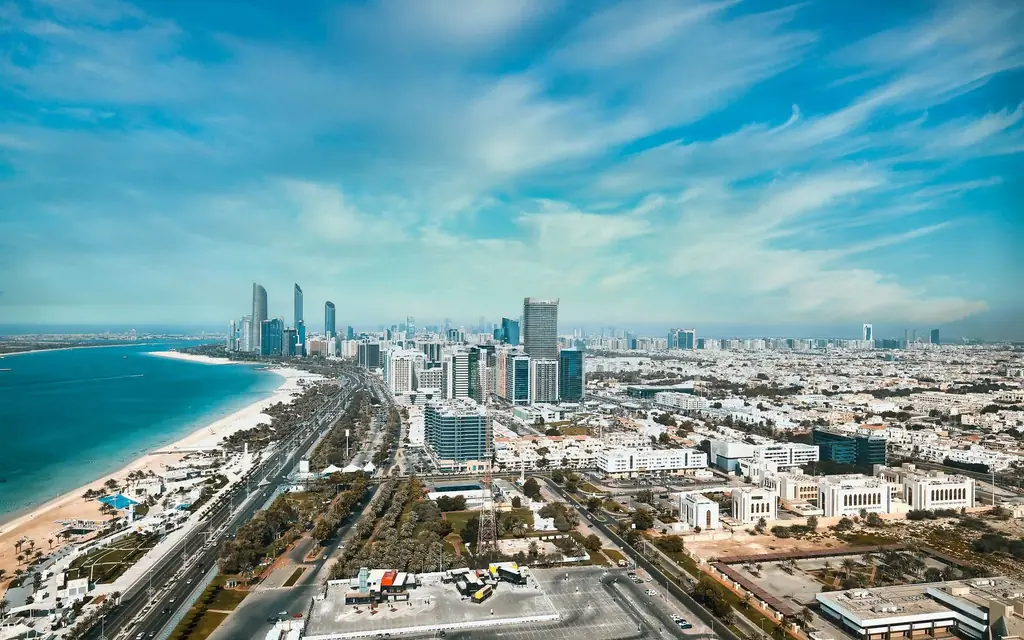
Abu Dhabi is not one place. A traveller heading to the Corniche, Al Maryah Island or the Grand Mosque is reaching the main island, and the bus terminal at Al Wahda is a reasonable starting point. A traveller to Yas Island (the Formula 1 circuit, the theme parks, the marina), to Saadiyat Island (the Louvre, the beach hotels) or to Zayed International Airport is going somewhere the bus does not reach, and the final leg must be a taxi, so the cost advantage of the bus shrinks quickly. If you are going to the Abu Dhabi Grand Prix, usually held in late November or early December on Yas Island, see our Abu Dhabi Grand Prix page, where closures and entry gates change the picture again.
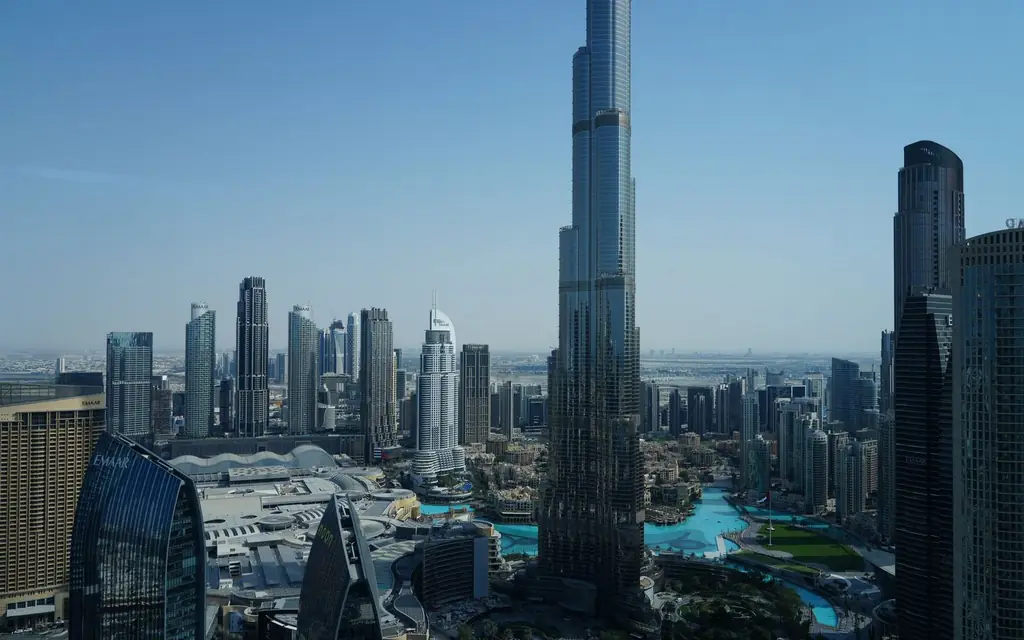
On the Dubai side, the same logic holds. Downtown, DIFC and the airport are a long way from Ibn Battuta. If you stay near the Marina or JLT, the bus is easy. If you stay near Downtown, it is a metro or taxi ride just to reach the bus.
An arrival-day sequence that works
For a traveller landing at Dubai International with a hotel in Abu Dhabi, the sequence that causes the least friction is to clear immigration, collect bags, meet the driver in arrivals and be on the highway within 30 to 45 minutes of landing. A name-board meet and greet inside the hall (see our Dubai airport meet and greet page) shortens the hand-off in a terminal where signage is long and crowds are dense. The reverse works as well: a driver collects you at the hotel at a time that fits your flight, with a buffer for the road.
For wider planning in the region, the Middle East overview lists the other cities and airports we cover.
Airports and timing
The two airports are connected by the same highway, and both have Terminal and Hall layouts that make pickups confusing. Our post on Dubai airport terminals 1, 2 and 3 explains the Dubai side. Allow at least 3 hours before an international departure whichever airport you use, and add the drive: if your flight leaves Dubai at 9 am and you are in Abu Dhabi, the road leg alone takes 2 hours plus the airport process.
A common mistake is to book a late-night return from Dubai after dinner and underestimate fatigue. Another is to plan a day trip with the bus and discover that the last convenient return is earlier than the dinner reservation. A booked car resolves both, because the schedule is yours.
Frequently asked questions
How much is the bus from Dubai to Abu Dhabi?
Abu Dhabi Mobility lists the inter-emirates fare to or from Dubai at AED 25 on its services page, with routes E100, E101 and E102 running from Abu Dhabi Main Bus Station. The Dubai end of the E101 is Ibn Battuta.
How long is the drive from Dubai to Abu Dhabi?
From the Dubai Mall area to the Abu Dhabi main bus station it is about 140 km (87 mi), roughly 1 h 30 without traffic and usually up to 2 h in practice. Heavy traffic at the Abu Dhabi approaches or on a Friday afternoon can push it past 2 hours.
Is there a toll between Dubai and Abu Dhabi?
Yes. Dubai uses Salik gates, which charge by time of day and add 5 per cent VAT from 1 June 2026. Abu Dhabi uses Darb gates on the bridges to the main island, charging AED 4 per transaction at peak hours (7 to 9 am and 3 to 7 pm), with exemptions on holidays and on Sundays or Fridays depending on the source, so check before you travel.
What is the taxi fare from Dubai to Abu Dhabi?
Dubai taxis are metered. For scale, Abu Dhabi's published airport taxi tariff of AED 20 flag fall plus AED 1.82 per km works out at roughly AED 260 to 280 over 130 to 140 km. Expect a high figure and agree it before you start.
Does the E101 go to Abu Dhabi airport or Yas Island?
No. The E101 ends at the main bus station on Abu Dhabi island. For Yas Island, Saadiyat Island or Zayed International Airport you need a taxi, another bus or a pre-booked car for the last stretch.
Is it better to take a chauffeured car from the airport?
For a party with luggage, a late arrival or a destination on Yas or Saadiyat, yes: the fare is fixed in advance and the driver meets you. For a single traveller with one bag and a city-centre hotel, the bus is usually cheaper.
Which airports serve Abu Dhabi and Dubai?
Zayed International Airport (AUH) serves Abu Dhabi and Dubai International (DXB) serves Dubai. They are about 130 km (80 mi) apart by road, and many travellers choose the airport by flight price and then arrange the road leg.