 United StatesJFK
 MexicoMEX
 BrazilGRU
 ArgentinaEZE
 ChileSCL
 ColombiaBOG
 PeruLIM
 PanamaPTY
 Costa RicaSJO
 Dominican RepublicPUJ
 JamaicaMBJ
 BahamasNAS
 BarbadosBGI
 United KingdomLHR
 IrelandDUB
 FranceCDG
 GermanyFRA
 NetherlandsAMS
 BelgiumBRU
 SwitzerlandZRH
 AustriaVIE
 ItalyFCO
 SpainMAD
 PortugalLIS
 GreeceATH
 TurkeyIST
 DenmarkCPH
 SwedenARN
 NorwayOSL
 FinlandHEL
 PolandWAW
 Czech RepublicPRG
 HungaryBUD
 IcelandKEF
 United Arab EmiratesDXB
 QatarDOH
 Saudi ArabiaRUH
 IsraelTLV
 EgyptCAI
 MoroccoCMN
 South AfricaJNB
 KenyaNBO
 NigeriaLOS
 IndiaDEL
 PakistanLHE
 Sri LankaCMB
 SingaporeSIN
 MalaysiaKUL
 ThailandBKK
 VietnamSGN
 PhilippinesMNL
 IndonesiaCGK
 Hong KongHKG
 ChinaPVG
 TaiwanTPE
 JapanHND
 South KoreaICN
 AustraliaSYD
 New ZealandAKL
How long is a Mount Fuji day trip from Tokyo?
Plan on about two hours each way. Fujiyoshida's tourism office says the area is about 1.5 hours from central Tokyo by express bus or train, and Japan's national tourism organization gives just under two hours for the Shinjuku bus to Kawaguchiko Station. With viewpoints and lunch on top, it is a full day out.
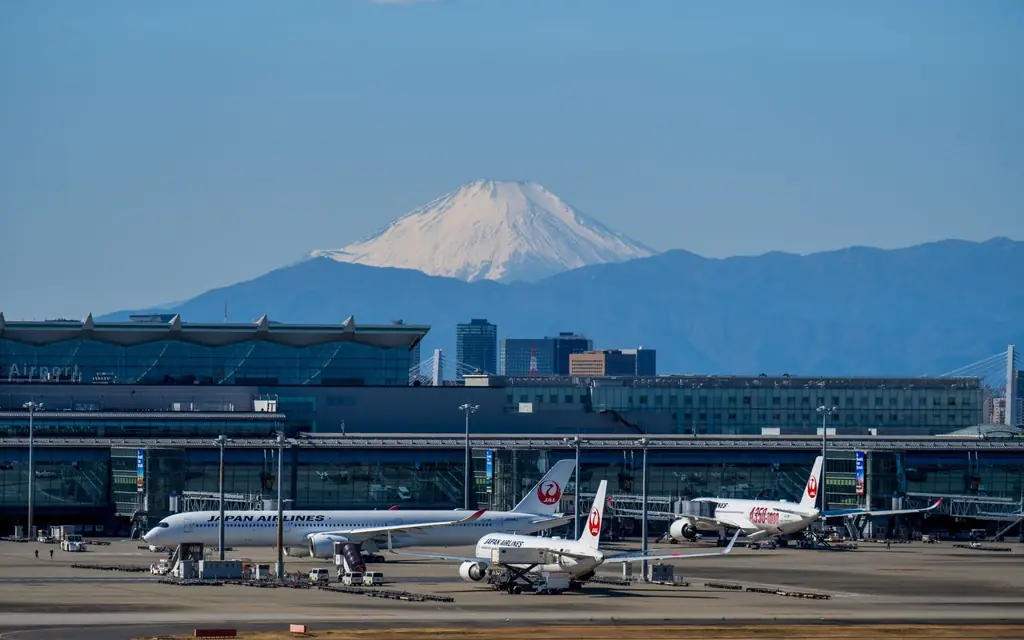
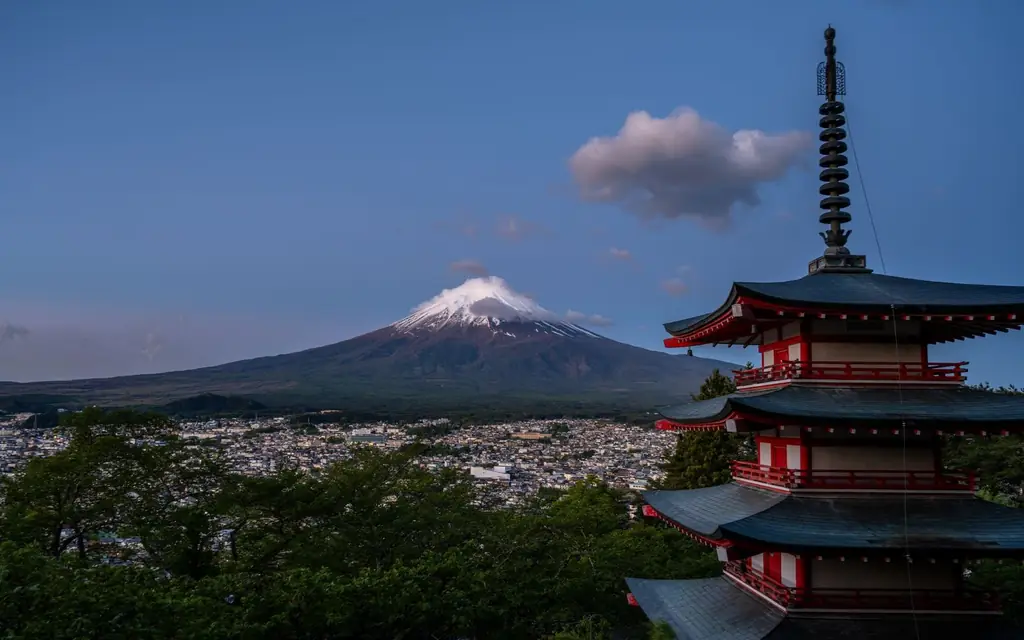
A Mount Fuji day trip from Tokyo is easy to picture and easy to botch. The mountain is visible from parts of Tokyo on clear winter days, but the classic views, with a lake or a pagoda in the foreground, are west of the city in Yamanashi Prefecture, around the Fuji Five Lakes. That means a real journey, a real timetable and a real chance of cloud.
This guide covers the practical questions in the order you meet them: which Fuji you are going to, whether you will see it, how to get there by train, highway bus and private car, what the rules are at the most photographed viewpoint, and when a car with a driver is worth arranging. Facts come from Japan's national tourism organization and the Fujiyoshida tourism office, read in October 2026.
Which Fuji are you visiting?
Three different trips share the same name. Climbing the mountain is a summer activity for people with the right gear and a different set of rules; it is not a day trip you add on after Tokyo Tower. Hakone, southwest of Tokyo, is a hot-spring and sightseeing region with its own transport and its own view of the mountain on clear days. The Fuji Five Lakes area to the north is the one most visitors mean, and it is the subject of this guide.
Within the Five Lakes, Lake Kawaguchiko is the one to pick for a first visit. Japan's tourism organization describes it as the most accessible of the five, with buses to the other lakes departing from Kawaguchiko Station. Fujiyoshida, a few stops before it on the Fujikyu Railway, adds the Chureito Pagoda and Arakurayama Sengen Park, which is the view on every postcard.
Will you see Mount Fuji? Visibility by month
Nobody can promise a clear view. The tourism organization's guide to Fuji views says crisp, clear winter days give the best views, early morning or late afternoon works best for close-ups, and the rainy season from early June to mid-July often hides the peak behind cloud. Its Lake Kawaguchi page says plainly that winter is the best time to see Mount Fuji clearly.
A few seasonal rules of thumb follow from that:
- November to February: the clearest air and the best odds. "Diamond Fuji", when the sun lines up with the summit, occurs from late October to late February.
- Mid-April: cherry blossom season, with a festival at Lake Kawaguchi. Beautiful and crowded, and the sky is less reliable than in January.
- Early June to mid-July: the odds drop. Pick a flexible day or skip it.
- November: the autumn-leaves festival at Lake Kawaguchi starts on 1 November and runs through the month, with maples framing the mountain.
Morning matters more than month. Haze and cloud build as the day warms, so a 9 am view is often better than a 2 pm view. If your schedule is flexible, check the forecast the night before and choose the day with the clearest morning.
By train: JR Chuo Line to Otsuki, then the Fuji Kyuko Line
The train route has a change. From JR Shinjuku Station, take the JR Chuo Line to Otsuki, then switch to the Fuji Kyuko Line for Kawaguchiko Station. The tourism organization notes that the JR Rail Pass is not accepted on the Fuji Kyuko Line, so a pass holder still pays a separate fare for that leg. Our Japan Rail Pass guide explains where a pass does and does not help.
Fujiyoshida's tourism page says the town is about 1.5 hours from central Tokyo by express bus or train and describes the Fujikyu Railway as a scenic line with views of the mountain. The Fujikyu Railway also serves the station for Chureito Pagoda, Shimoyoshida, which is why many visitors alight there first and finish at the lake.
The train is predictable, avoids the Chuo Expressway entirely and is the sensible choice for one or two travellers with day bags. It is less sensible after a long-haul flight with a case, and it does not stop at the places that sit between stations.
By highway bus from Shinjuku
The highway bus leaves from the Shinjuku Expressway Bus Terminal and runs to Kawaguchiko Station. The tourism organization gives the journey as just under two hours. Timetables and frequencies change by season, and the official page does not list them, so check the operators it links to and book ahead on weekends and holidays.
The bus is a straight line from Shinjuku to the lake with no change. Its weakness is the road. The Chuo Expressway is the main route west from Tokyo, and a holiday Sunday evening can turn the two-hour trip into three. Buses also cannot go everywhere you want. As Fujiyoshida's tourism office puts it, buses cannot enter the parking area at the pagoda park because the roads around it are narrow.
By private car
The road distance from Shinjuku to Kawaguchiko is about 105 km. A road-network estimate (OSRM, free-flow, no traffic) puts the drive at roughly 1 hour 35 minutes, and two hours is a sensible planning figure for a normal day. Allow well over that on public holiday weekends. A private car with a driver leaves from your hotel door and returns to it, and it lets you decide on the morning whether to go to Chureito first or to the lake first.
From Haneda or Narita, a car is the route that avoids dragging luggage through Shinjuku Station. Both airports have their own transfer pages: see the Haneda to Tokyo transfer, the Narita to Tokyo transfer, and for hotels in the Shinjuku area the Haneda to Shinjuku and Narita to Shinjuku pages. If you are still choosing an airport, our comparison of Narita and Haneda will help.
A driver can add a stop at Chureito, one at the lake and one on the way back for a meal, and he or she stays with the vehicle while you walk. For trains arriving at Tokyo Station, the Tokyo Station rail transfer page explains where drivers meet you.
How the options compare
| Mode | Door-to-door time | Cost note | Luggage | Best for |
|---|---|---|---|---|
| Private car with driver, fixed fare via the booker | About 2 h each way from central Tokyo | Fixed fare quoted before you pay | Cases ride with you | 3+ travellers, post-flight days, flexible stops |
| Highway bus from Shinjuku | Just under 2 h plus the walk to the terminal | Per-seat bus fare set by the operator | Small bags | Solo or two travellers, no change of vehicle |
| JR Chuo Line plus Fuji Kyuko Line | Depends on the connection at Otsuki; Fujiyoshida's tourism office puts the area about 1.5 h from central Tokyo | Two fares; Rail Pass not valid on the Fuji Kyuko Line | Small bags | Reliability, avoiding expressway traffic |
| Escorted tour coach | Full-day fixed programme | Per-seat price set by the tour operator | Day bag | A fixed itinerary and a guide |
| Taxi from Kawaguchiko Station | Local hops only | Metered | Limited | Short hops once you arrive |
When the train or bus is the better choice: a solo traveller or a couple with day bags, a single destination at the lake, and no need to stop at the pagoda. When the private car wins: three or more people, a day that starts after a flight, children, mixed mobility, or any plan with two or three stops in different towns.
Chureito Pagoda and Arakurayama Sengen Park: the rules
The pagoda is the single most photographed Fuji view in the country, which is also why it has the most rules. Fujiyoshida's park page describes the walk from Shimoyoshida Station on the Fujikyu line as about 25 minutes on foot, and the climb to the observation deck as 398 steps. The deck reopened on 1 February 2022. The park is open 24 hours, with illumination in the evening whose start time changes by month.
Parking is paid, in blocks of six hours, and the town lists four small lots of roughly 20 to 90 spaces each. Buses cannot access the park's parking lots because the surrounding roads are narrow, and large tour buses are directed to a separate bus parking area in Shimoyoshida. The town also discourages driving up to the plaza in front of the memorial tower because of the crowds, calling it dangerous.
What this means for you: if you arrive by private car, your driver drops you near the station and collects you afterwards, rather than looping the narrow streets. You walk the final stretch, as the town intends. The public toilets are on site, but the town asks visitors not to use the station restrooms. Observe the signs near Taishoji Temple, where stopping and parking are prohibited.
The convenience-store viewpoint at Fujikawaguchiko
Another photograph went viral for a different reason: a convenience store in Fujikawaguchiko with the mountain apparently sitting above its roof. In May 2024 the town put up a tall black mesh screen along the pavement to stop the crowds, and news reports said visitors cut holes in it within days. The mayor said the screen would be replaced with a stronger one.
Whatever the barrier looks like when you arrive, the rule is the same. The pavement is narrow, residents live there, and you should not step into the road to frame a shot. If you want the picture, look for the lake viewpoints, which are designed for visitors.
A sample day by private car
This is a typical winter day. Adjust it for traffic and for the forecast.
- 7:00 Pick-up in Shinjuku. Leave early to be ahead of the expressway queue.
- 9:00 Arrive at Shimoyoshida for the pagoda, with the morning light on the mountain.
- 10:30 Drive to Lake Kawaguchiko for the lakeshore walk.
- 12:00 Lunch near the station.
- 13:30 Choose one more stop along the lakeshore. Japan's tourism organization notes lavender there from late June to mid-July.
- 15:30 Depart for Tokyo.
- 18:00 Back at the hotel; later on holidays.
Public transport users can do a leaner version, with an early bus out and a late bus back. Allow a buffer on the return.
Mistakes that waste the day
- Going in the rainy season with no flexibility on the date.
- Starting late. Cloud builds through the day, so a noon arrival is a weaker bet.
- Assuming the Rail Pass covers the Fuji Kyuko Line. It does not.
- Booking a bus seat at the last minute on a holiday weekend.
- Expecting a tour bus or a taxi to drive up to the pagoda. It will not.
- Forgetting the return leg. Check the last bus before you commit to dinner at the lake.
For help choosing the right season for the whole trip, our guide to Japan's cherry blossom season in 2027 covers the busiest weeks, and the Asia-Pacific section lists all our transfer pages in the region, including rail transfers.
Frequently asked questions
How far is Mount Fuji from Tokyo?
The Fuji Five Lakes, where most viewpoints are, lie roughly 105 km west of central Tokyo by road. By road or rail that is about 1.5 to 2 hours each way. The summit itself is further, and climbing it is a separate summer activity with its own rules.
What is the best way to get from Tokyo to Kawaguchiko?
For one or two travellers, the highway bus from Shinjuku (just under two hours) or the JR Chuo Line plus Fuji Kyuko Line. For three or more people, children, luggage or several stops, a private car often works out simpler. The right answer depends on your group.
Is the Japan Rail Pass valid to Kawaguchiko?
The JR Chuo Line section is JR, but Japan's tourism organization notes the pass is not accepted on the Fuji Kyuko Line from Otsuki. You pay that leg separately. A highway bus is outside the pass altogether.
When is the best time to see Mount Fuji?
Winter. Japan's tourism organization says crisp, clear winter days offer the best distant views, with Diamond Fuji from late October to late February. Early morning and late afternoon are best. The rainy season, early June to mid-July, often hides the peak.
Can you do Mount Fuji and Hakone in one day from Tokyo?
It is technically possible but poorly advised. The two regions lie in different directions and each is a full day on its own. Choose one, and give it time.
How do you get to Chureito Pagoda?
Take the Fujikyu line to Shimoyoshida Station and walk about 25 minutes, then climb 398 steps. Buses cannot enter the park's parking lots because the roads are narrow, so a car drops you near the station and waits there.
Is a private car worth it for a Mount Fuji day trip?
When you have three or more travellers, heavy bags from the airport, children, or want to decide the route on the morning, yes. For a solo traveller with a day bag, the bus or train is simpler and the better choice.