 United StatesJFK
 MexicoMEX
 BrazilGRU
 ArgentinaEZE
 ChileSCL
 ColombiaBOG
 PeruLIM
 PanamaPTY
 Costa RicaSJO
 Dominican RepublicPUJ
 JamaicaMBJ
 BahamasNAS
 BarbadosBGI
 United KingdomLHR
 IrelandDUB
 FranceCDG
 GermanyFRA
 NetherlandsAMS
 BelgiumBRU
 SwitzerlandZRH
 AustriaVIE
 ItalyFCO
 SpainMAD
 PortugalLIS
 GreeceATH
 TurkeyIST
 DenmarkCPH
 SwedenARN
 NorwayOSL
 FinlandHEL
 PolandWAW
 Czech RepublicPRG
 HungaryBUD
 IcelandKEF
 United Arab EmiratesDXB
 QatarDOH
 Saudi ArabiaRUH
 IsraelTLV
 EgyptCAI
 MoroccoCMN
 South AfricaJNB
 KenyaNBO
 NigeriaLOS
 IndiaDEL
 PakistanLHE
 Sri LankaCMB
 SingaporeSIN
 MalaysiaKUL
 ThailandBKK
 VietnamSGN
 PhilippinesMNL
 IndonesiaCGK
 Hong KongHKG
 ChinaPVG
 TaiwanTPE
 JapanHND
 South KoreaICN
 AustraliaSYD
 New ZealandAKL
Getting from the airport to a Tokyo hotel looks easy on a map and is easy on a good day: a rail line, a monorail, a bus network and a long rank of taxis all run from Haneda. The difficulty is the last mile. Tokyo's best hotels sit in skyscrapers above stations, in districts where one wrong exit costs ten minutes, and you will arrive with luggage after a long flight. This page walks through the choices in order, from sending your bags ahead to a door-to-door car from Onroutz.ca, and says honestly when the train or taxi is the better call. Route-level detail sits on our Haneda to Tokyo and Narita to Tokyo pages.
What is the best way to get from Haneda or Narita to a Tokyo hotel?
From Haneda, a private car takes about 30 to 50 minutes to a central hotel and avoids every change and staircase. The monorail and Keikyu line are quick if your bags are light. From Narita, about 65 to 75 km away, the Narita Express, Skyliner or a car take an hour or more, and a car is the only option that does not end at a station.
The honest rule is simple: the closer your hotel is to a station on the line you are riding, and the lighter your bags, the better rail looks. The further from the station, the more luggage you carry and the later you land, the more a car wins.
Which airport are you landing at?
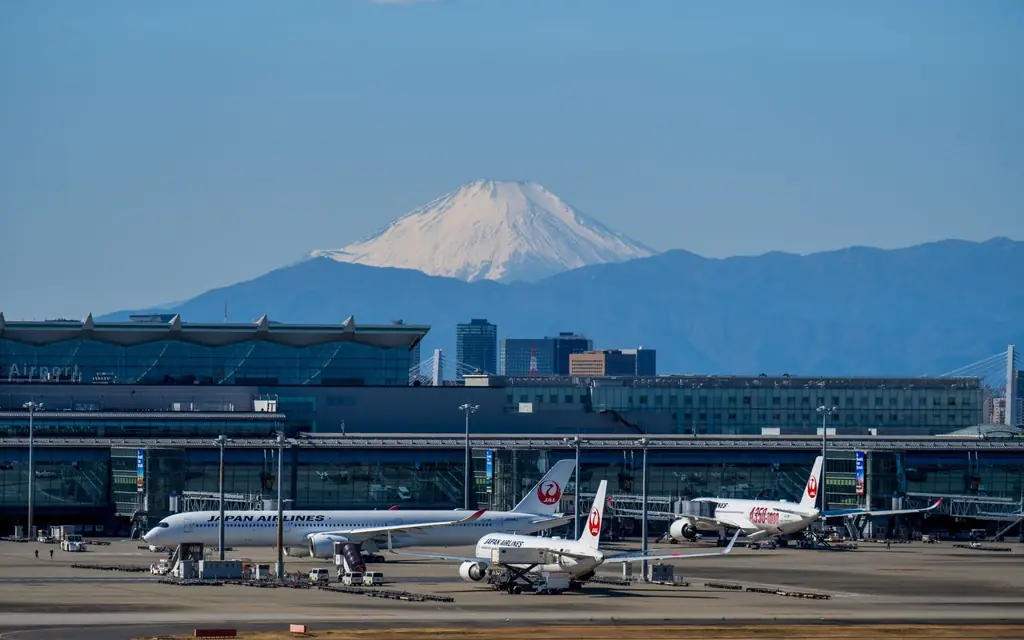
Tokyo has two main international airports. Haneda (HND) is inside the city's southern edge and has three terminals, with international flights using more than one, so check your terminal on your boarding pass. Narita (NRT) is in Chiba, with Terminals 1, 2 and 3. Haneda handles late-night and early-morning international flights, which makes it the easier landing for a hotel check-in. Narita is much further, so the transfer matters more.
If your flights put you at Narita and your onward flight leaves from Haneda, see Narita to Haneda for the airport-to-airport run.
How far is each Tokyo hotel district from the airports?
Distances are road distances, rounded, with typical driving times on the expressways. Tokyo's Metropolitan Expressway is busiest on weekday mornings and evenings and on the last days of the month, and allowing the upper end of the range is wise for a tight schedule.
| Hotel area | From Haneda | From Narita | What to know |
|---|---|---|---|
| Marunouchi, Otemachi, Nihonbashi | About 18–20 km / 11–12 mi, 30–45 min | About 65–70 km / 40–43 mi, 1 h–1 h 30 | Office-tower hotels; the car stops at the tower or building entrance |
| Hibiya, Yurakucho, Ginza | About 18–20 km / 11–12 mi, 30–45 min | About 65–70 km / 40–43 mi, 1 h–1 h 30 | Close to Marunouchi; Ginza side streets are narrow and one-way |
| Akasaka, Roppongi, Azabudai | About 20 km / 12 mi, 30–50 min | About 70 km / 43 mi, 1 h 10–1 h 40 | Complexes with several entrances; the hotel name matters more than the district |
| Shinjuku and Nishi-Shinjuku | About 20 km / 12 mi, 30–50 min | About 75 km / 47 mi, 1 h 15–1 h 45 | Skyscraper district; the hotel is usually reached from a ground-level forecourt |
These figures match the distances on our Haneda to Shinjuku and Narita to Shinjuku pages. Give the booker the exact hotel and the fare it shows is fixed for that address.
Every way from the airport to your hotel, side by side
| Mode | Door-to-door time | Cost note | Luggage | Best for |
|---|---|---|---|---|
| Private car (Onroutz.ca partner) | HND 30–50 min; NRT 1 h–1 h 45 | Fixed fare via booker, quoted before you pay | Sedan: 2 large + 2 cabin; SUV: 5–6 large; van: 12 | Families, heavy bags, late arrivals, skyscraper hotels |
| Tokyo Monorail from Haneda | 13 min to Hamamatsucho, then 30–45 min with a change | ¥520 on a paper ticket to Hamamatsucho, as of 2026 | Whatever you can carry on stairs | Light travellers, hotels near Hamamatsucho or the Yamanote line |
| Keikyu Line from Haneda | About 15 min to Shinagawa, plus the onward change | Public fare | Limited space at peak hours | Shinagawa or Yokohama-side hotels |
| Airport Limousine Bus | Varies by route; check the operator | Public fare | Luggage stowed under the bus | Hotels that are a stop on a route, one or two travellers |
| Narita Express or Skyliner | N'EX to Tokyo or Shinjuku; Skyliner 36 min to Nippori | Skyliner adult fare ¥2,470, as of 2026 | Racks; a reserved seat for N'EX | Narita arrivals with a hotel near the line |
| Fixed-fare taxi | Same as a car on the expressway | Zone fare by airport, tolls on top; see below | 2–3 bags | Spontaneous trips to covered wards |
| Luggage forwarding plus train | Train time only | Courier fee set by the carrier | Bags travel separately | One-night stays, light-day-bag travellers |
The Tokyo Monorail and Keikyu times come from Haneda's rail access page, and the Narita options from Narita's rail page. Neither Haneda line runs all night, so check the last departure before relying on rail after a late landing.
Option 1: send the suitcase ahead (takkyubin)
Japan's courier network is part of ordinary travel. Yamato Transport (the black-cat TA-Q-BIN brand), Sagawa and JAL ABC all run luggage-delivery counters at Haneda. The airport's home delivery page lists their counters by terminal and their opening hours: Terminal 1 and Terminal 2 have Sagawa and Yamato desks in the arrival lobbies, and Terminal 3 has JAL ABC and Yamato desks. Narita has comparable counters, and Keisei describes a hands-free service that sends heavy luggage ahead to your accommodation the same day.
How it works:
- Collect your bags and wheel them to a courier counter in arrivals.
- Show the hotel's address and name. The booking confirmation is enough; a printed Japanese address is faster.
- Pick the delivery day. For hotels in the Tokyo area, standard delivery is commonly next day, and some counters offer same-day with a morning cut-off. Ask at the counter, because the rules change.
- Keep the receipt, and ask the hotel to confirm it will accept the parcel.
The sensible combination is a day bag with documents, medication, chargers and a change of clothes, a courier for the big suitcase, and a train or car for you. We do not move courier parcels, so decide before you land. If you want your bags with you the whole way, that is where a car comes in.
Option 2: the taxi, and a rule about wards
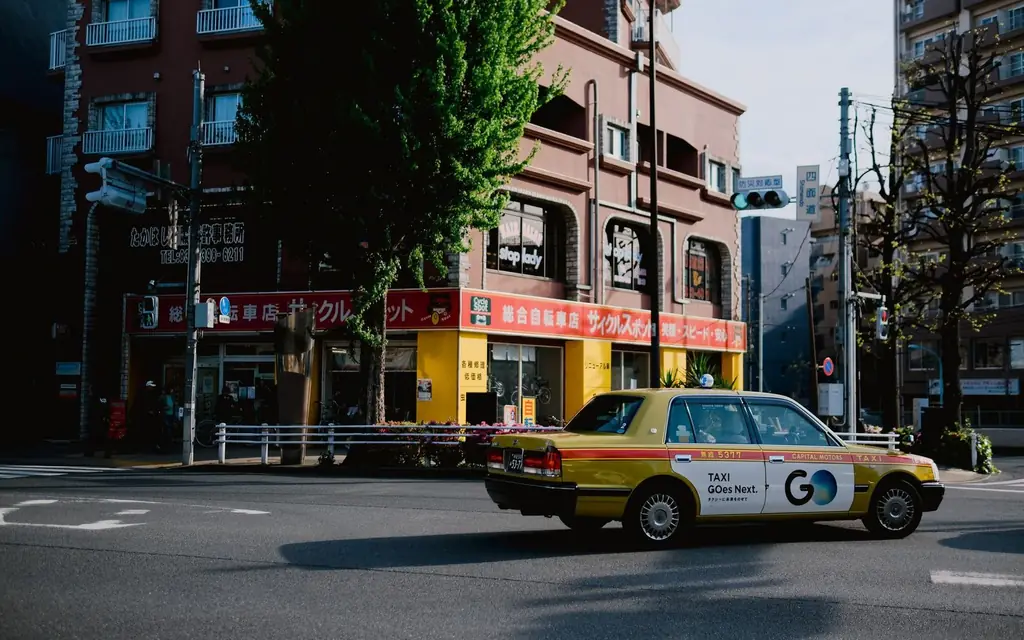
Tokyo's taxis are clean, metered and well run. Rear doors open and close automatically, drivers load the boot, and tipping is not customary in Japan. Both major airports publish fixed fares.
At Haneda, the Tokyo Hire-Taxi Association's fixed-fare rules are worth reading, and one detail matters to hotel guests. Per those rules, as read in 2026, the terminal taxi stand's flat fare covers Tokyo's 23 wards except Ota, Shinagawa, Minato, Chuo and Koto, plus two nearby cities. A 20% premium applies when the whole trip falls between 22:00 and 05:00, and expressway tolls are paid on top.
Why that matters: five of our listed hotels are in Chiyoda ward and one in Shinjuku ward, which are covered. The Mandarin Oriental in Chuo ward, and the Janu Tokyo and The Ritz-Carlton in Minato ward, are in the excluded group, so the meter normally applies unless you book ahead with a company that includes them. Narita publishes its own zone table on its fixed-fare taxi page. Ask the driver for the fixed fare before you get in, and confirm the details at the stand.
Option 3: the Airport Limousine Bus
The Airport Limousine Bus network runs luggage-friendly coaches from both airports to major hubs and a long list of hotels. Its great advantage is that some routes stop at or very near hotel entrances, so there is no change and no stairs. The catch is that routes and stops vary by airport and change, and not every hotel is on a route. Search the operator's official timetable for your hotel's name before you rely on it, and note the last bus. For hotels not on a route, the bus ends at a hub and you take a short taxi.
Option 4: the train, with a realistic view of luggage
Tokyo's stations are among the most efficient in the world, and they are full of stairs, long corridors and crowds. From Haneda the monorail reaches Hamamatsucho in 13 minutes, and the Keikyu line takes about 15 minutes to Shinagawa. From Narita, the Skyliner takes as little as 36 minutes to Nippori, and the Narita Express stops at Tokyo, Shinagawa, Shibuya, Shinjuku and Yokohama. All good, if your hotel is a short walk from the terminus. For a skyscraper hotel across a large complex, the last stretch can double the trip. For onward shinkansen journeys, our Tokyo Station page explains where to meet a car.
When a private car is the right call
- Three or more travellers. One Luxury SUV takes up to six passengers and five to six large bags.
- Heavy or awkward luggage. Golf bags, strollers, wheelchairs and trunks do not fit well on a crowded platform.
- Late arrivals. Your flight is tracked, and trains thin out after midnight.
- Children. Child, toddler and booster seats can be added at booking.
- A skyscraper hotel. The driver knows which entrance suits your hotel.
- Business schedules. Fixed fare, no change and a quiet car to work in.
- Narita. At 65 to 75 km, the car is often the calmest option.
See the fleet for vehicle classes, or read how private airport transfers work. Compare your options in airport transfer versus taxi versus rideshare.
Major hotels we drive to
| Hotel | District | Nearest airport | Pickup and drop-off note |
|---|---|---|---|
| Aman Tokyo | Otemachi | Haneda | Aman's site says the hotel occupies the top floors of Otemachi Tower, so you arrive at the tower and take a lift |
| The Peninsula Tokyo | Yurakucho / Marunouchi | Haneda | Yurakucho, close to Hibiya Park and the Imperial Palace grounds; drop-off at the hotel entrance |
| Mandarin Oriental, Tokyo | Nihonbashi | Haneda | Nihonbashi Muromachi, in Chuo ward, so the Haneda stand's flat fare does not apply |
| Imperial Hotel, Tokyo | Hibiya / Uchisaiwaicho | Haneda | In Hibiya, next to Ginza and Yurakucho; the hotel is a large building with a main entrance |
| Four Seasons Hotel Tokyo at Otemachi | Otemachi | Haneda | In Otemachi, in Chiyoda ward; give the hotel name, as the area has several towers |
| Four Seasons Hotel Tokyo at Marunouchi | Marunouchi | Haneda | In Pacific Century Place, Marunouchi, the Tokyo Station side of the business district |
| Janu Tokyo | Azabudai (Azabudai Hills) | Haneda | Inside the Azabudai Hills development, in Minato ward; give the hotel name |
| Park Hyatt Tokyo | Nishi-Shinjuku | Haneda | Shinjuku Park Tower, in Shinjuku's skyscraper district; the hotel is on upper floors |
| The Ritz-Carlton, Tokyo | Roppongi / Akasaka (Tokyo Midtown) | Haneda | The Ritz-Carlton's site says the hotel takes the top floors of Midtown Tower and that arrival is on the 45th floor |
Hotels are listed to help you plan; listing does not mean the hotel is affiliated with or endorses Onroutz.ca.
How the transfer works on the day
Onroutz.ca is a transfer desk based in Toronto. In Japan, the car and chauffeur come from a vetted, licensed and commercially insured local transfer partner, and Onroutz.ca books, confirms, supports and invoices the ride from Toronto: one booking, one confirmation, one invoice, one 24/7 contact. Partner vehicles are no more than four model years old.
- Book with your flight number, the terminal if you have it, the hotel and the party size.
- See the fixed fare in the booker before you pay. It includes expressway tolls.
- Your confirmation lists the vehicle class and the meeting point.
- Land. We track the flight from departure. A name board is held inside arrivals, and an alias can go on it if you prefer. Free waiting is 60 minutes after an international landing and 30 after a domestic one.
- Ride to the hotel entrance. Most vehicles carry water and phone charging.
Immigration and baggage claim at a large airport can be slow, and the free waiting time is meant to absorb that. Tell us if you plan to send bags by courier, so the car is sized for what you will carry.
Skyscraper hotels: what changes at the kerb
Many Tokyo luxury hotels are on the upper floors of towers. Aman Tokyo takes the top of Otemachi Tower, and The Ritz-Carlton takes the top floors of Midtown Tower. In those cases the car stops at the tower entrance, you take a lift to the lobby floor, and the hotel handles the bags from there. Complexes such as Tokyo Midtown, Azabudai Hills and Pacific Century Place have several entrances, and the right one is not always the nearest. That is why we ask for the hotel's name as well as the district. A driver who has done the run knows which entrance the hotel staff prefer.
Late nights, early flights and delays
- Late landings. Haneda handles late-night international arrivals, and the rail lines do not run all night. A tracked pickup removes the dependence on a last train.
- Delays. Free waiting starts at actual landing, not scheduled time. If your flight is rebooked, the 24/7 desk moves the pickup.
- Narita. It is further, and a late landing there makes a hotel transfer much longer. Plan the car for the first night.
- Check-in. Many hotels cannot offer a room before the afternoon. Ask for a bag drop if you land early.
Groups, VIP and discretion
Sports teams, tour parties and conference delegations can use the Executive Sprinter (up to 12 passengers, 12 bags) or a 20 to 56-seat mini-coach or coach, arranged on request. Chauffeurs keep trips private, with no client photographs or posts, and NDAs are available. Onroutz.ca is a transport desk rather than a security firm, so there are no bodyguards or armed drivers; it coordinates with your own security staff. See meet and greet and private transfer for detail, and the Asia-Pacific hub for other cities. For a wider list of city pages, see hotel transfers.
Frequently asked questions
Is there a free hotel shuttle from Haneda Airport?
Not as a general service. Some airport-area hotels run their own shuttles, but central Tokyo luxury hotels generally do not, so ask your hotel in writing. The realistic choices are the train, the Airport Limousine Bus, a taxi, courier forwarding or a pre-booked car.
How long does a transfer from Haneda to a central Tokyo hotel take?
About 30 to 50 minutes by car for Marunouchi, Ginza, Roppongi and Shinjuku, depending on the hour. Rail times to the nearest hub are shorter, but you then change trains and walk.
Can I send my luggage from the airport to my hotel?
Yes. Courier counters at Haneda and Narita offer delivery to hotels, and delivery within the Tokyo area is commonly next day. Check the counter's cut-off for same-day service and confirm that your hotel accepts parcels.
Is a taxi from Haneda a good option for my hotel?
For hotels in Chiyoda or Shinjuku, the terminal stand's flat fare applies. For Minato and Chuo wards, the meter normally applies unless you book a company that includes those wards. Tolls are paid on top, and a 20% premium covers 22:00 to 05:00.
Do I tip the driver in Japan?
Tipping is not customary in Japan. Your fare is quoted in the booker before you pay, and the chauffeur does not expect more.
Will the driver wait if my flight is delayed or immigration is slow?
Yes. Free waiting starts at actual landing: 60 minutes after an international arrival and 30 after a domestic one. If your flight is rebooked, the 24/7 desk moves the pickup.
What is your cancellation policy?
More than 72 hours' notice: no charge. 72 hours or less: 10%. 48 hours or less: 50%. 24 hours or less, or a no-show: 100%, counted from the scheduled pickup. Peak-season events may use another deadline, shown on the confirmation.