 United StatesJFK
 MexicoMEX
 BrazilGRU
 ArgentinaEZE
 ChileSCL
 ColombiaBOG
 PeruLIM
 PanamaPTY
 Costa RicaSJO
 Dominican RepublicPUJ
 JamaicaMBJ
 BahamasNAS
 BarbadosBGI
 United KingdomLHR
 IrelandDUB
 FranceCDG
 GermanyFRA
 NetherlandsAMS
 BelgiumBRU
 SwitzerlandZRH
 AustriaVIE
 ItalyFCO
 SpainMAD
 PortugalLIS
 GreeceATH
 TurkeyIST
 DenmarkCPH
 SwedenARN
 NorwayOSL
 FinlandHEL
 PolandWAW
 Czech RepublicPRG
 HungaryBUD
 IcelandKEF
 United Arab EmiratesDXB
 QatarDOH
 Saudi ArabiaRUH
 IsraelTLV
 EgyptCAI
 MoroccoCMN
 South AfricaJNB
 KenyaNBO
 NigeriaLOS
 IndiaDEL
 PakistanLHE
 Sri LankaCMB
 SingaporeSIN
 MalaysiaKUL
 ThailandBKK
 VietnamSGN
 PhilippinesMNL
 IndonesiaCGK
 Hong KongHKG
 ChinaPVG
 TaiwanTPE
 JapanHND
 South KoreaICN
 AustraliaSYD
 New ZealandAKL
Do you need a passport to go to Mexico?
For a flight, yes. Mexico's immigration form page says the card-format passport is for land crossings and border-zone visits only, not for air travel or travel into the interior. The Government of Canada states the passport must be valid for your expected stay, and that visits of up to 180 days need no visa. Land and cruise arrivals differ.
The question has three answers because there are three ways in. A flight needs a passport book. A land crossing opens up more document options and a different form. A cruise stop sits under the cruise line's rules and Mexico's own, and your return to your home country is a separate matter again.
This guide takes each route in turn, using the Government of Canada's Mexico travel advice (updated 9 October 2026), the UK government's entry requirements for British citizens, the Mexican immigration institute's online form page and US Customs and Border Protection's guidance on returning home. It then explains the FMM, how many days you actually get, and the practical points around the airport arrivals that matter to a pre-booked ride.
I could not open the US State Department's Mexico page when I checked in October 2026 because it blocked automated access, so US-specific entry text comes from the Canadian and CBP pages, which cover the Mexican rules and the return respectively. Read the State Department page before you travel as well.
Passport rules for flying to Mexico
The Government of Canada's Mexico entry requirements state: "Your passport must be valid for the expected duration of your stay in Mexico." It adds that your airline's validity rules can be stricter than Mexico's, so check them. The UK government's Mexico entry requirements say the same about the length of your stay, and that the Mexican Embassy in the UK recommends at least 180 days of validity, the longest tourist stay.
So the safe approach is to carry a passport valid for at least six months beyond your arrival date. It costs you nothing, and it removes an argument at the check-in desk.
Mexico's immigration institute makes a further point on the online form page for the FMM: a passport card is accepted only for land crossings and visits to the border zone, "not for air travel or travel into Mexican territory". If you are used to travelling with a passport card inside North America, a flight to Cancún, Los Cabos or Puerto Vallarta is the situation where it does not work.
Which entry route needs which document?
| Entry route | Document | Form | Notes |
|---|---|---|---|
| Flight | Passport book valid for the stay | FMMD completed online after arrival (passport stamp or E-gate kiosk) | Entry fee usually included in the ticket |
| Cruise stop | Set by the cruise line and Mexico | Entry fee usually included in the cruise ticket | Confirm with the line before sailing |
| Land crossing | Passport; passport card accepted for land and border-zone visits | FMM, unless under 72 hours in the northern border zone | Fee payable at booth, bank or online unless a tourist stays 7 days or less |
For Canadians, the Government of Canada explains the forms in detail. By air, you either get a passport stamp or use an E-gate kiosk, and then complete the digital immigration form (FMMD) online on arrival, keeping a downloaded copy. By land, you need an FMM unless you stay under 72 hours in the northern border zone, defined as within 21 km of the US border.
How many days do you get, and who decides?
The Government of Canada's page says tourist, business and student visits of up to 180 days do not need a visa, but also says the maximum is not automatic: the immigration officer sets the actual length of your stay.
The practical lessons:
- Ask for what you need. If you are staying three months, be prepared to say so.
- Be ready to show your plan. You may need to explain your trip and show accommodation, funds, and onward or return travel. If you are staying with someone, you may need an invitation letter.
- Check the stamp or the form. The days granted are on the stamp or the digital record. Do not assume 180.
- You cannot extend from inside Mexico. The Canadian advice states you cannot extend or change your status there, and overstaying can bring fines, detention or deportation.
The UK page is consistent: no visa is needed for tourism, and you receive an entry stamp showing your permitted days. It also notes you may need to show a return or onward ticket, proof of accommodation, and proof of sufficient funds at border control.
What is the FMM, and do you need to fill it in?
The FMM (Forma Migratoria Múltiple) is Mexico's tourist card. In its digital form for air arrivals it is called the FMMD. Its function is to record the number of days you are authorised to stay.
According to the Mexican immigration institute's online FMM page:
- It has a maximum validity of 180 calendar days.
- It is valid for one entry only.
- Validity starts when the migratory stamp is applied.
- The status granted is "visitor without permission to work".
- It needs your passport details to match the form exactly, and you must accept under oath that the information is true.
- Paying a fee does not guarantee entry into Mexico.
The Canadian advice adds practical rules. Carry your FMMD or FMM at all times, because you may need to show it at checkpoints or when leaving, and replacing a lost one can cost money. Land travellers can fill the FMM online before arrival, print it, or complete it on arrival.
Is there an entry fee or a tourist tax?
The Government of Canada says the migratory entry fee is usually included in airline and cruise ship tickets. Travellers arriving by land pay at the entry booth, at a bank after entry, or online beforehand, and attach the receipt to the FMM. Land entrants for tourism staying 7 days or less are exempt.
A separate item applies to one popular state. The UK government's advice says visitors to Quintana Roo, the state that contains Cancún, must pay an entry tax online before or during their stay and show proof at Cancún Airport before leaving. It does not give an amount, so check the amount and the payment site on the day you book.
The UK advice also notes that a departure tax may apply by air or land, and that some crossings accept only cash.
Do you need a passport for a Mexico cruise?
This is the most confused question, because two separate rules are in play.
Mexico's side. The Canadian advice says the entry fee is usually included in cruise ship tickets, but does not set out document rules for cruise passengers. So the document you need to land in a Mexican port is set by the cruise line, which in turn follows Mexico's requirements. Confirm with the line, and carry a passport anyway.
Your return home. US Customs and Border Protection's guidance on the Western Hemisphere Travel Initiative says that a US citizen on a cruise that starts and ends at the same US port may enter the United States with a birth certificate and government-issued photo ID. For air travel, a passport is required, and children must present their own passport when flying.
The consequence: a closed-loop cruise lets you re-enter the US with other documents, but it does not guarantee that the cruise line will let you board without a passport, and it does nothing if you miss the ship and have to fly home. A passport covers every scenario.
Dual citizens, children and criminal records
A few categories need extra care.
- Dual citizens. The Canadian advice says dual citizens must enter and leave Mexico as Mexican citizens with valid passports for both countries. To return to Canada by air, they must use a valid Canadian passport.
- Children. You may be asked for evidence of your relationship, such as a birth or adoption certificate, and the reason for travel. Mexican citizens or residents under 18 need a consent form if travelling without a guardian.
- Criminal records. Canadians with a criminal record or an arrest warrant may be refused entry.
Airport arrival to resort: what happens next
After immigration and baggage, the airport transfer is the next step. The major airports are far from their resort areas, so the transfer deserves a plan:
- Cancún Airport to Playa del Carmen: about 55 km (34 miles), roughly 45 minutes without traffic. See the Cancún airport to Playa del Carmen page.
- Cancún Airport to Tulum: about 120 km (73 miles) to Tulum town, roughly 1 hour 35 minutes without traffic. See the Cancún airport to Tulum page.
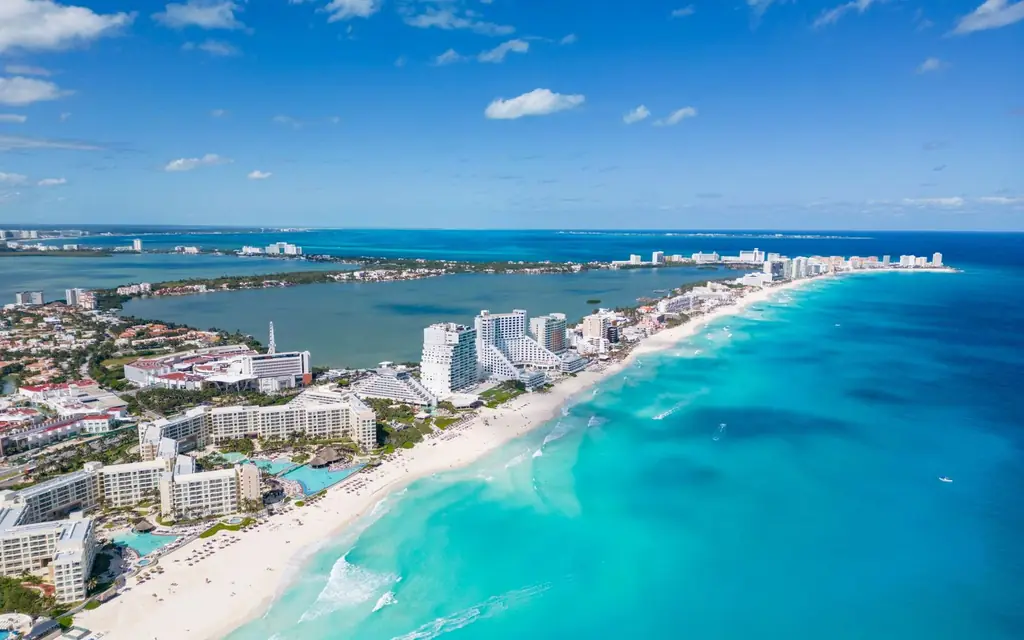
These are free-flow figures from OpenStreetMap road-routing data. Times rise at peak hours and on arrival-bank mornings, so a driver who tracks your flight and meets you in arrivals is simpler than looking for a ride after a long queue. The Cancún airport resort transfers page, the Los Cabos page and the Puerto Vallarta page describe the airport-to-resort runs for those three gateways, and the Caribbean and Mexico hub lists the rest.
Tipping drivers and resort staff in Mexico
Tipping is customary in Mexico's resort areas and not regulated by the government. I did not find an official tipping guide on a government or tourism-board site, so I am not quoting percentages here. Practical points that are safe regardless: carry small notes in pesos or small US bills, check whether a restaurant bill already shows a "propina" line before adding to it, and ask your hotel or tour operator whether gratuities are included in any package you bought.
A document checklist for a Mexico trip
- Passport book valid for the whole stay (and ideally 180 days).
- Airline's own validity rules checked.
- FMM or FMMD plan: online after arrival (air), or printed (land).
- Proof of accommodation, funds and onward travel in your phone or bag.
- Quintana Roo entry tax checked if you are visiting Cancún or the Riviera Maya.
- Children's relationship documents and consent forms where relevant.
- Pickup details for the airport transfer, including the flight number.
For related reading, see the Tulum airport versus Cancún airport guide, the Cancún airport terminals guide and the sargassum and best time to visit Cancún guide.
Frequently asked questions
Do I need a passport to fly to Mexico?
Yes. Mexico's immigration institute says the card-format passport is for land crossings and the border zone, not for air travel. Carry a valid passport book, and check that it is valid for your whole stay and meets your airline's rules.
Do I need a visa for Mexico?
Not for tourism for Canadians, Americans or Britons, as of October 2026. The Government of Canada says visits of up to 180 days for tourism, business or study need no visa. Work requires a visa. Check your own nationality on the official page.
How many days do I get on arrival?
Up to 180, but the immigration officer decides. The days granted are shown on your stamp or digital FMMD. You cannot extend from inside Mexico, and overstaying can bring fines or detention.
What is the FMM, and is it free?
It is Mexico's tourist card. For flights, the entry fee is usually included in the airline ticket, and the FMMD is completed online after arrival. By land, the fee is paid separately unless you are a tourist staying 7 days or less.
Do I need a passport for a Mexico cruise?
The cruise line sets the document rule for boarding and landing, so ask the line. For a US citizen on a closed-loop cruise, CBP says a birth certificate and government photo ID are enough to re-enter the US. A passport covers every situation.
Can I use a passport card to enter Mexico?
Only for land crossings and border-zone visits, according to Mexico's immigration institute. It is not accepted for air travel or travel into the interior. If you plan to stay under 72 hours within 21 km of the northern border, the Canadian advice says no FMM is needed.
Is there a tax for visiting Cancún?
The UK government's advice says visitors to Quintana Roo must pay an entry tax online and show proof at Cancún Airport before leaving. Check the amount and the official payment site before you travel.
Can a driver meet me at Cancún Airport?
Yes. Name-board meet and greet in arrivals is available on request, with flight tracking, and the booker shows the fixed all-in fare for your pickup, drop-off and vehicle before you pay.