 United StatesJFK
 MexicoMEX
 BrazilGRU
 ArgentinaEZE
 ChileSCL
 ColombiaBOG
 PeruLIM
 PanamaPTY
 Costa RicaSJO
 Dominican RepublicPUJ
 JamaicaMBJ
 BahamasNAS
 BarbadosBGI
 United KingdomLHR
 IrelandDUB
 FranceCDG
 GermanyFRA
 NetherlandsAMS
 BelgiumBRU
 SwitzerlandZRH
 AustriaVIE
 ItalyFCO
 SpainMAD
 PortugalLIS
 GreeceATH
 TurkeyIST
 DenmarkCPH
 SwedenARN
 NorwayOSL
 FinlandHEL
 PolandWAW
 Czech RepublicPRG
 HungaryBUD
 IcelandKEF
 United Arab EmiratesDXB
 QatarDOH
 Saudi ArabiaRUH
 IsraelTLV
 EgyptCAI
 MoroccoCMN
 South AfricaJNB
 KenyaNBO
 NigeriaLOS
 IndiaDEL
 PakistanLHE
 Sri LankaCMB
 SingaporeSIN
 MalaysiaKUL
 ThailandBKK
 VietnamSGN
 PhilippinesMNL
 IndonesiaCGK
 Hong KongHKG
 ChinaPVG
 TaiwanTPE
 JapanHND
 South KoreaICN
 AustraliaSYD
 New ZealandAKL
When is the best time to visit Cancún?
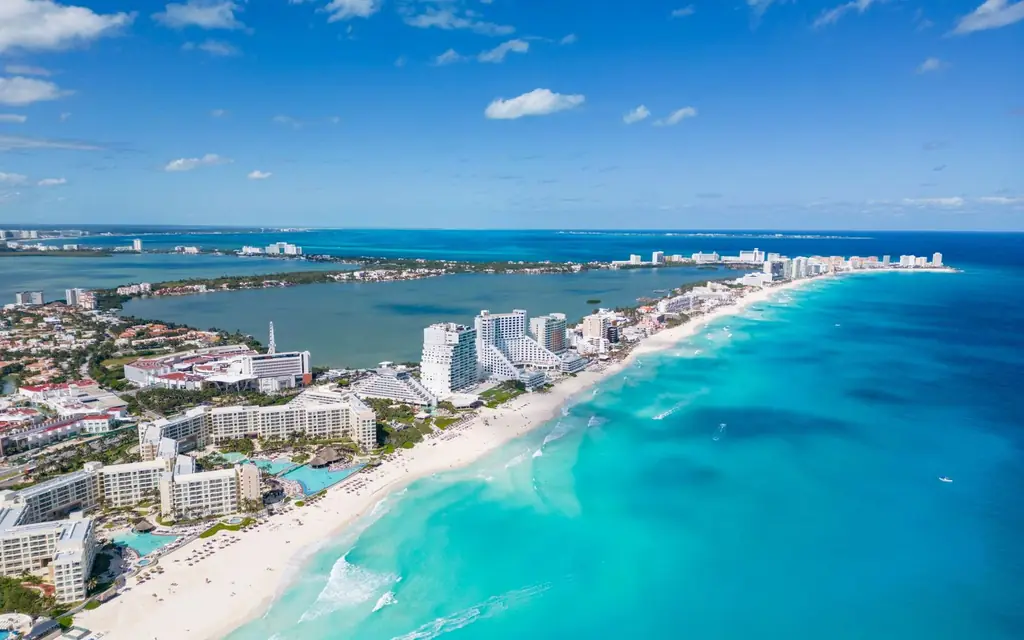
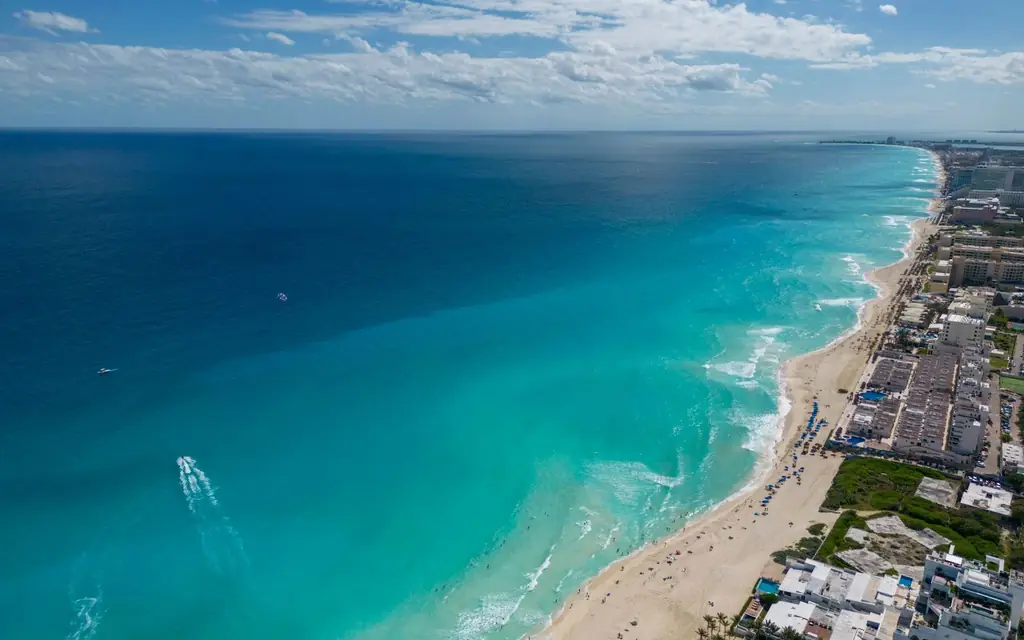
The best time to visit Cancún for weather, calmer seas and clear beaches is late November to mid-December, February, or late April to May after Easter. March and Holy Week are the busiest. Hurricane season runs 1 June to 30 November, and in 2026 sargassum arrived from January and lasted into autumn.
Cancún sells itself as a year-round destination, and in a narrow sense it is: the sea is warm in every month. But a week there in February and a week there in August can be different trips. One has dry air and a busy beachfront. The other has heat, thunderstorms and, in a bad year, seaweed on the sand. This guide sets out the three things that decide the experience: weather and storm risk, sargassum, and the crowd and price calendar.
We have kept to what official or primary sources state and flagged where travel guides differ. The sargassum sections draw on 2026 reports from Quintana Roo authorities and Mexico's environment ministry, because 2026 broke records and changed how travellers should think about "sargassum season".
Weather by season
Travel guides broadly describe a drier, cooler stretch from about November to April and a hotter, wetter stretch from about May to October, with the heaviest rain commonly placed in late summer and early autumn. Sea temperatures stay warm throughout. Specific monthly rainfall tables vary a lot between guides, and we could not verify one from the national weather service, so we leave exact figures out rather than quote a travel blog.
The hurricane calendar is better documented. The U.S. National Hurricane Center states that the Atlantic hurricane season runs from 1 June to 30 November. It gives 10 September as the peak, with most activity between mid-August and mid-October. The NHC's climatology page uses data from 1944 to 2020. A direct hit on a specific resort in a given week is unlikely, but a storm anywhere in the Gulf of Mexico or the Caribbean can disrupt flights, ferries and excursions for days.
What this means in practice:
- November to April: the most settled weather and the highest demand. Cooler evenings, steady sun.
- May to mid-June: hot, humid, often good value. Sargassum can already be present.
- Mid-June to November: heat, afternoon storms and the hurricane window. Book flexible fares and consider cover.
Sargassum: what 2026 showed
Sargassum is a floating brown seaweed that drifts across the Atlantic and lands on Caribbean beaches. In the Mexican Caribbean it has traditionally been associated with spring and summer, with arrivals starting around March. In 2026 that pattern broke.
According to a Quintana Roo newspaper report dated 1 October 2026, the state's environment secretariat said 138,000 tonnes had been collected in 2026 by 30 September, up 67.2% on the 92,782 tonnes collected in all of 2025, with a projection that the year could pass 150,000. The report quotes Mexico's environment ministry (Semarnat) as calling the Caribbean arrival the worst in history, and says the Navy recognises 2025 and 2026 as the two years with the highest removal on record. Most relevant for planning, it says 2026 had no defined start or end: arrivals began in January instead of March, and were expected to end in September but continued in smaller amounts. You can read it in full on Por Esto.
The same report said an oceanographic institute lowered its alert to "low" with a green flag in early October after 10,103 tonnes were detected, down from 46,632 at the start of the month. That points to a lull as the year ends, not a guarantee.
Reports of the state beach monitoring network at the end of September described the north of the state as mostly low in sargassum, while the south of Quintana Roo showed much heavier presence. Earlier in the year, reports listed dozens of beaches on red or excessive alert. Conditions change quickly with winds and currents, which is why we do not give a calendar of "safe" months.
How to plan around it:
- Treat spring to autumn as higher risk, and winter as lower, not zero. The traditional pattern still has some predictive value, but 2026 showed it can start in January.
- Check the live status before you book and again the week before. The Quintana Roo government publishes a beach-by-beach traffic-light map, and the University of South Florida's Sargassum Watch System publishes daily satellite maps and monthly outlook bulletins for the Caribbean and Gulf of Mexico.
- Choose a hotel with a plan B. Many resorts clear their own beaches and have pools; ask whether the beach is cleared daily.
Where the beaches stayed clearer
Sargassum arrives with currents from the east, so east-facing stretches of the open Caribbean coast bear most of it, and sheltered or north-facing shores can fare better. In 2026, state monitoring showed the northern part of Quintana Roo faring better than the south. Cozumel was reported at low levels in July, with several named beaches in the clear category.
For Cancún itself, the picture varied by week. The sensible approach is to treat these as tendencies:
- The north of the state, including Cancún and the islands off its coast, was reported with mostly low presence at the end of September, though individual weeks differ.
- The Hotel Zone faces open water in places, so landings vary week to week, and resorts typically clear the sand each morning.
- Cozumel was reported at low levels during the summer of 2026.
- The south of Quintana Roo showed the heaviest presence in the late-September reports, with most monitored points rated abundant or excessive.
None of these is a promise. Beach conditions are a daily reading, not a seasonal rule, and our guide on Tulum airport vs Cancún airport helps if you decide to base yourself further south or north.
The crowd and price calendar
Travel guides agree on the shape of the busy periods, though not on exact dates, which move every year.
- Christmas and New Year: the peak, with the highest hotel prices and the fullest beaches.
- Spring break, mostly mid to late March: the loudest weeks, driven by student travel.
- Semana Santa (Holy Week) and Easter: families travel, and dates swing between late March and mid-April. Easter falls on 28 March 2027, so Holy Week overlaps with the spring-break weeks next year and the March crush will be heavier than in years when Easter is in April.
- Summer school holidays: July and August are busy for families despite the heat and storm risk.
Quieter windows include early January after the holiday rush, February, late April to May, and late November to early December. Guides commonly rate February as the best combination of weather, price and crowds, though it is a judgement and conditions vary by year.
We do not print hotel prices, but the pattern is straightforward: rates and flights peak around Christmas, spring break and Easter, and fall in the shoulder windows.
Best time to visit Cancún, month by month
| Months | Weather | Sargassum tendency | Crowds and prices |
|---|---|---|---|
| December to January | Dry and settled | Lower, though 2026 saw arrivals from January | Very high at Christmas and New Year; easing after |
| February | Dry, pleasant | Tends lower | Moderate; often called the sweet spot |
| March | Dry, warm | Rising | Spring break; peak weeks mid to late March |
| April | Warming | Moderate to high | Easter and Holy Week; falls after Easter |
| May to June | Hot and humid, first storms | Often high | Good value; hurricane season starts 1 June |
| July to August | Hot, afternoon storms | Historically the heaviest months | Family holidays; busy |
| September to October | Wettest, storm peak around 10 September | Variable; 2026 eased in autumn | Cheapest; flexible tickets advised |
| November | Drying out; season ends 30 November | Lower | Quiet until the Christmas build-up |
Getting around when you arrive
Cancún airport is the gateway to the whole coast. Its own site tells visitors to pre-arrange transport to their hotel, and lists official airport taxis, public buses and car rental as the other options. Ride length depends on where you sleep. The distances and times below are OSRM road routing figures, rounded; add time for traffic.
| Destination | Typical drive from the airport | Cost note | Best for |
|---|---|---|---|
| Cancún Hotel Zone | About 13 to 25 km (8 to 15 mi); roughly 15 to 25 min without traffic, depending on where on the strip | Fixed fare via booker | Resort stays |
| Puerto Morelos | Under an hour | Fixed fare via booker | Quiet coast, snorkelling |
| Playa del Carmen | About 55 km (34 mi); roughly 45 min without traffic | Fixed fare via booker | Nightlife, restaurants |
| Tulum | About 115 km (72 mi); roughly 1 h 30 without traffic | Fixed fare via booker | Beach hotels, ruins |
| Public bus (ADO) | Longer, with stops | Scheduled fare | Light packers |
Our pages cover these drives in detail: Cancún Airport transfers, Cancún Hotel Zone transfers, Cancún Airport to Tulum and the Caribbean and Mexico hub. Read the Government of Canada travel advice for Mexico before you go; it asks visitors to use only officially marked taxis and to pre-pay inside the terminal if paying by card.
Choosing your month: four scenarios
You want the best weather and accept paying for it. Late November to mid-December, or February. Book hotels early for February, since mid-winter attracts snowbirds.
You want warm water and good value, and can accept sargassum risk. May, early June or October. Check the sargassum maps and buy flexible tickets.
You are travelling with children in school holidays. July and August bring heat and storms, so choose a resort with shade, pools and a plan for rain.
You want a Cancún trip without the party crowds. Avoid March, and look at the first weeks of December, late January or late April and May.
Planning the rest of the trip
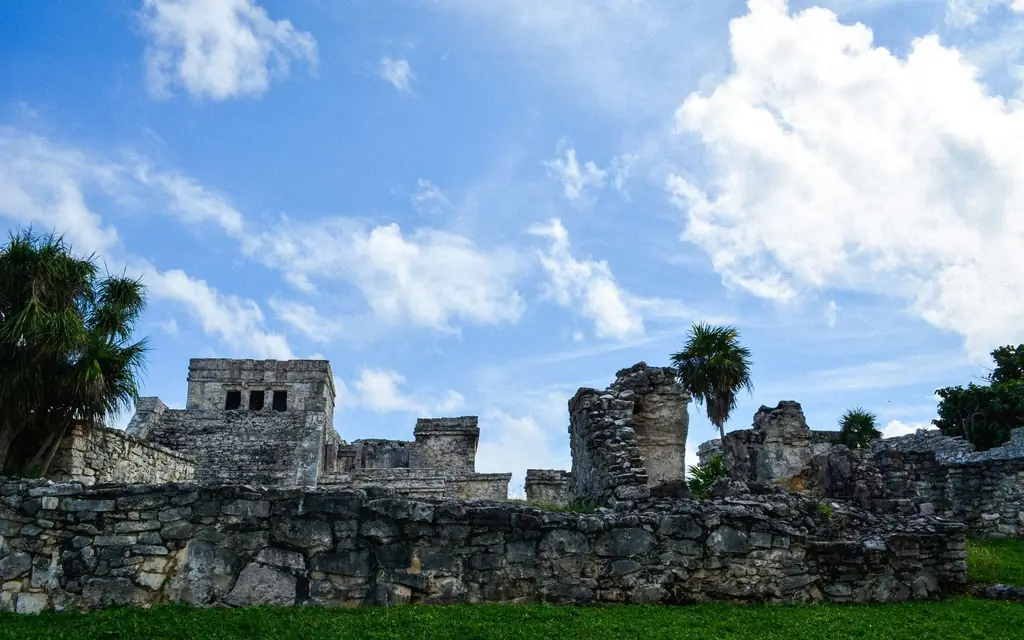
A beach week often includes a day away from the coast. Our guide to Chichén Itzá from Cancún covers the drive and the opening-hour tactics, and the terminal guide to Cancún airport explains where arrivals and drivers meet. If you are travelling from Canada, check whether you need a passport for Mexico before you book, because a change of dates is a good moment to check your expiry date.
Arrival-day logistics that help in any month
- Give your driver your flight number so a delay is tracked rather than guessed.
- Ask for a name board in arrivals if you are landing after dark or with children.
- Add any car seats you need when you book.
- Keep your digital migratory form (FMMD) accessible; Canadian travel advice says to keep a copy with you.
- If a storm is forecast, confirm your pickup the day before and tell your driver if your flight changes.
Frequently asked questions
What is the best month to visit Cancún?
February is the choice many guides make for the combination of dry weather, manageable crowds and sargassum risk, with late November to mid-December a close second. March brings spring break, and September has the highest hurricane risk. Your priorities (price, weather or quiet) decide the final answer.
When is sargassum season in Cancún?
Traditionally from about March, peaking in summer. In 2026 arrivals began in January and continued through the year, with Mexican authorities calling it the worst on record. Use the live monitoring maps before you travel, because conditions change by the week.
How much sargassum was there in Quintana Roo in 2026?
By 30 September, 138,000 tonnes had been collected, 67.2% above all of 2025, with a projection above 150,000. Environment officials called it the worst arrival in history. The report said alerts eased to low in early October.
Is hurricane season a bad time to visit Cancún?
It is a higher-risk time, not a closed one. The season runs 1 June to 30 November, with a peak around 10 September and most activity between mid-August and mid-October. Book flexible tickets, buy insurance and watch forecasts.
Which beaches near Cancún have less sargassum?
Reports in 2026 showed the north of Quintana Roo, including areas near Isla Mujeres and Costa Mujeres, faring better than the south, and Cozumel at low levels in July. Conditions are daily, so check the state map and satellite bulletins.
Is Easter or spring break the busiest time in Cancún?
Both are among the busiest. Spring break runs mostly mid to late March and Holy Week moves between late March and mid-April. In 2027 Easter is 28 March, so the two overlap, which makes March 2027 especially crowded.
How long is the transfer from Cancún airport to the Hotel Zone?
Roughly 15 to 25 minutes without traffic, depending on where your hotel sits along the strip, and up to 45 minutes in heavy traffic (our planning allowance). Cancún's airport site advises pre-arranging your transport, and a booked car with flight tracking avoids queues at the taxi stand.